Friday, March 06, 2009

The Listeners

‘Is there anybody there?’ said the Traveller,
Knocking on the moonlit door;
And his horse in the silence champed the grasses
Of the forest’s ferny floor:
And a bird flew up out of the turret,
Above the Traveller’s head:
And he smote upon the door again a second time;
‘Is there anybody there?’ he said.
But no one descended to the Traveller;
No head from the leaf-fringed sill
Leaned over and looked into his grey eyes,
Where he stood perplexed and still.
But only a host of phantom listeners
That dwelt in the lone house then
Stood listening in the quiet of the moonlight
To that voice from the world of men:
Stood thronging the faint moonbeams on the dark stair,
That goes down to the empty hall,
Hearkening in an air stirred and shaken
By the lonely Traveller’s call.
And he felt in his heart their strangeness,
Their stillness answering his cry,
While his horse moved, cropping the dark turf,
’Neath the starred and leafy sky;
For he suddenly smote on the door, even
Louder, and lifted his head:—
‘Tell them I came, and no one answered,
That I kept my word,’ he said.
Never the least stir made the listeners,
Though every word he spake
Fell echoing through the shadowiness of the still house
From the one man left awake:
Ay, they heard his foot upon the stirrup,
And the sound of iron on stone,
And how the silence surged softly backward,
When the plunging hoofs were gone.

-- Walter De La Mare

Monday, March 02, 2009

Ruminate

Has your pet squirrel been chewing the trees lately?
(Botany) Presenting a chewed appearance; permeated by striæ; striated, marbled.

Inform

Did you know it could be an adjective as well? Then it is read as in- + form: Not endowed with form, nebulous and formless.
'The budding of the seed, the change of wind, / The inform steps of age ...'

几何与想像

不久前在网上找到一套标题为《几何与想像》的教学材料,这几天刚开始看仔细看。这套教材相当有趣,它是由四名很有成就的几何学家编的(其中包括约翰 · 康威和威廉 · 瑟斯顿),用于明尼苏达州立大学的几何中心开办的一门课程。课程标题同样为《几何与想像》,名副其实,它的主要目的在于启发与提升学生、读者在几何方面的想像能力,让他们从而对各种几何形状与几何概念获得更深、更全面、更扎实的了解。
例如教材前面部分有一系列关于正多面方体(即柏拉图立体)的问题。让正四面体竖立在一个顶点上,其最高点与最底点半当中的横截面回呈现什么样的形状?让正八面体卧在一面上,同样的横截面又会呈现什么形状?在正十二面体的二十条边上行驶,能否找出一条路,让我们从一个顶点开始,当中没有重复地探访所有其他顶点,最后回到我们原来开始的顶点?若是二十面体呢,我们能从它的三十条边中拼出这样的一条路吗?
思考着这些问题时,我对这些立体奇特的素质有了深深的体会。Their symmetry is truly startling. The same number of edges and faces meet at any one vertex, at the same angles. Each of the Platonic solids thus looks exactly the same from any one of its vertices, or from any one of its edges, even the icosahedron with its thirty edges and twelve vertices. There isn't only symmetry in each of them, there's symmetry among the five of them: the dodecahedron has twelve faces and twenty vertices, the icosahedron twenty aces and twelve vertices, and both have thirty edges. Their graphs are dual. Same for the octahedron and the cube ... and the tetrahedron is its own dual. When such symmetry as such, in dry, compact words, it is merely an interesting fact. When one discovers it for himself (or herself) in the process of visualising, realising these solids in the mind's eye, it becomes an source of sheer wonder.
在这以前两个星期还在做竞赛题目,做到头昏脑胀还做不出。通常思考到后来就开始思路模糊不清,已经被发现行不通的旧思路反复地在脑子里转,新思路怎样也想不出。归根结底,大概是因为不完全理解而缺乏想像力。不了解题目的根本,没有想像力得出新的思路,结果一直钻牛角尖,捉不住解题的关键。
在这样的情况下,预期继续闷头死做题目,远远不如通过类似与《几何与想像》的教材来培养想像力与数学直觉。

Saturday, February 28, 2009

'Oh, it'll be fun.'

'It is recognised, Lawrence, that you have a funny sense of fun.'

Sunday, February 22, 2009

Vindication of Title

As anyone who has ever taken the time to look at one of nature's fine works might have suspected, all trees really are graceful. This means that, among other things such as olive trees, firecrackers and caterpillars, all lobsters are indeed graceful. It also this page should no longer be there. Well done, Gilbert.

Edit: The post might have been a little premature because the proof really seems quite sloppy.

耐心

你需要的是耐心。耐心地慢慢积累,耐心地等待时机。不能因为眼前没有成绩而气馁。你需要的是专心,不能因为心急着要办成一件事而把所有其他事都置之不理。做事要稳妥,从容;做人也要如此。

Possibility C

Maybe you just suck at it, in which case you should start looking at alternative futures right now. Oh dear.

Ardent

" ... desde el salar, ardiente y mineral ... "
Positively burning with passion.

Saturday, February 21, 2009

三十年河东,三十年河西

'Up to the late 1960s, Cambodia was the shining star of Indo-China, a confluence of intellectuals, traders, artists and bourgeois who lived, played and worked there. Phnom Penh was the jewel of Asia then. Lee Kuan Yew, the first Prime Minister of Singapore visited Cambodia in April 1967 at the invitation of Prince Norodom Sihanouk. Cruising along the capital's elegant boulevards in a Mercedes convertible, Lee turned to his host and said, "I hope, one day, my city will look like this".'
Perhaps it was telling that Harry chose the verb "look" instead of "be"?

Friday, February 20, 2009

Engmalchin

'A Malayan language will arise out of the contributions these communities will make to the linguistic meltingpot. The emerging language will then have to wait for a literary genius who will give it a voice and a soul, a service which Dante performed for the Italian language.'
But the supposedly disparate tongues whose agglutination Dante sparked to form the Italian vernacular were rather closely related in the first place -- no more, really, than dissimilar dialects. To hope for something similar with such a diverse group of languages, with different roots, different histories, different syntaxes, even different writing systems, is rather a stretch. Maybe, just maybe, it will happen one day. But not, I dare say, anytime in the foreseeable future.

A Depressing Thought

'While in other countries, political parties come and go, but the country remains the rallying point for the people’s feelings, in Singapore, the Government has become synonymous with the country. Indeed, Singapore is often seen as the creation of the PAP, made to its image and likeness. Hence, dislike of the PAP, even though it does not translate into dislike of Singapore, effectively blocks out any spontaneous outpouring of patriotic emotion. ...If loyalty towards the country is blocked, it has to be directed elsewhere. In Singapore, it is directed at the good life which the country has come to represent. ... There is by now an almost adulatory quality about the attachment of Singaporeans to the affluence which their parents never knew and which came their way so quickly. ... This kind of loyalty is, of course meretricious. It changes with its object. Hence, when the good life diminishes, so will it. When the good life disappears, so may it. But the most insidious aspect is its mobility. It will uproot and move with the good life. Hence, if economic prosperity is no longer in Singapore but moves to Canada, Australia, the United States, China, it will re-locate itself accordingly. ... Such a volatile, mobile loyalty is of course a travesty of the patriotism it has displaced and a mockery of all the earnest effort that the Government and the people have put into the building of the country over three decades.

Even if such a sinister scenario does not arise, a growing emotive estrangement between the Government and the people is not a healthy thing. It could create a schizoid society where head is divorced from heart, where there is a double agenda and double book-keeping with people agreeing with the Government in public but saying something else in private.' - The PAP and the people - A Great Affective Divide (1994). (It really is a discredit to the Gahmen that they had to employ their sledgehammers and pound the table instead of delivering a similarly eloquent riposte.)

...

'If there are passionate Singaporeans working in Singapore, I have yet to meet them.'

Have we really all turned into a bunch of money-grubbers with no ideals whatsoever?

Section View of Snowstorm (selected details)

Supposedly when the sub-prime mortagage crisis hit America, entire swathes of less-glitzy suburbs emptied out and turned into vacant shells, as their bankrupt residents simply left with their meagre belongings before the bank came to repossess their houses. A somewhat even more surreal version of this is happening in Dubai. Dubai has been going quite crazy lately ... sort of like Singapore on steroids and with far more impulsive planning. Perhaps the crunch, now that it has come, will drive them far crazier too.
On the somewhat brighter side, some firms are still not in a "just retrench" mood. I don't know how true Toyota's sentiment that simply shedding 10 per cent of its North American work force would be a disaster' because '"if respect for people goes out the window, then they lose the foundation for the future because then suddenly people are going to say this company is not any different from any other company."' So what if propsective employees don't discern between Toyota, Nissan and GM? As long as they are willing to work at any one of those firms, isn't it all the same for the employers? But maybe benefits do accrue to Toyota due to employee loyalty. It would be interesting to find out, in an objective, rigorous way, for sure. Either way, it is a heartening thing to know that cold, hard capitalism isn't all there is in this world.

Szym

One day, I will learn Polish, so that I can read Wisława Szymborska's works untranslated. And master all of Szymanowski's piano sonatas. Or maybe you are only experiencing a strange, passing fixation with that consonant group at the moment.

Saturday, February 14, 2009

Metaphor of Purpose

I should be a candle, shining with a warm brilliance so that I may illuminate those around me.
It sounds awfully trite, and there will be no doubt many, many occasions when I would simply fail to live up to it, but let it stand as a reminder of my life's purpose.

Proactivity

On the second day of Exercise Warrior, when we were on our way to the platoon ambush site in the rain which had been going on since forever, this guy with two plum blossoms on his epaulette and a red beret came up and started talking to the GPMG team. (Or maybe he didn't have his red beret then, but for some reason in my memory his red beret was an inseparable part of him, whatever the rest of his attire.) 'Hi ... what do you think is the MG commander's job? ... It's to look for a job to do. You should never be waiting around doing nothing ... go and find an arc of fire to cover, run somewhere and deploy your guys ...' And then he went off to talk to the trainee platoon sergeant.
Then the only response we could muster, being handicapped by thoroughly soaked attire and a full combat load, was "okay, so it's true that the higher your rank, the more you talk." Now, his comments start to make rather more sense. The MG is a powerful asset, and the commander should be constantly trying to maximise its effect, to get it to work for the rest of the platoon, so that life is made that little bit easier for the whole platoon.

Friday, February 13, 2009

A Hierarchy of Power

Chekhov's "The Princess" left a strong impression in my mind that stayed for days, and its tirade against hypocrisy is still embedded deep inside today. The stories from Wena Poon's superb collection "Lions in Winter" resonated deeply when I read them, and still leave residue impressions, but these are somewhat less clearly-defined than that left by the Chekhov. By comparison, Effie Chuang's short stories are interesting, particularly "The Gulag" and "Bravado", but nowhere as powerful.
Whence the difference? Is it in the wealth of detail that bring the stories to life, that flesh out the characters and make them more than just abstract conceptions in the author's mind? ('The good writers touch life often. The mediocre ones run a quick hand over her. The bad ones rape her and leave her for the flies.') Is it just a matter of resonance, that I as a reader am more receptive to and remember more deeply certain stories and messages? Or probably some combination of both.

Post-Admin

'Until quite recently, then, the American military Services have been inclined to consider post-conflict operations not as a part of war itself, but as something belonging to its aftermath—a view that has obscured “the fact that the principal condition for strategic success in the wars in Afghanistan and Iraq was the establishment of a political (and to a certain extent an economic) order favorable to the United States.”'
Echoing, on a larger scale, Staff Alan's remark to the effect that the exercise isn't over until the post-admin is complete.

Next

'Next, a range of advances in the cognitive sciences, biotechnology, medicine, and nanotechnology appear to be converging toward giving humans heretofore unprecedented capabilities to modify or enhance the physical, cognitive, and socio-emotional performance of individuals. Possibilities range from giving combatants pharmaceuticals to resist fatigue or function longer without sleep to accelerating muscle growth or cell strength with temporary or permanent genetic modifications, to improved human-machines interfaces, to better predictive methods for assigning individuals to the combat roles for which they are best suited. By way of illustrating that such things are already here, the drug Ritalin not only improves the academic performance of hyperactive children, it can also do the same for normal children. Ritalin is “commonly thought to boost SAT scores by more than 100 points.”'
(Adam Russell and Bartlett Bulkley, Human Performance Modification Primer (Herndon, VA: Scitor Corporation, January 2007), FOUO (For Official Use Only), pp. 1–5, 9–13.
Michael S. Gazzaniga, “Smarter on Drugs,” Scientific American Mind, September 2005, pp. 33–34.)

Science and technology really seem to have a way of sneaking up on you while you aren't watching.

Monday, February 09, 2009

Am I still attached to Shanghai?

Not really. Come to think of it, I do not have the same sense of attachment to any one place that some people show so strongly. All my relatives are there. Most of my friends are here. My childhood memories are scattered over three places eleven thousand kilometres apart. Certainly many precious memories are linked to this Most Serene city-republic. But I wouldn't feel as sorry or sad to leave, whether for a year or a decade, as you seemed to be yesterday. When I fly between Singapore and China -- and this is the one thing I would miss most, really, when I finally change citizenship -- the immigration counters welcome me home on both sides. I feel slightly sad at not being able to enjoy the same welcome on both ends any more ... but in an objective analysis, of what importance is such a trivial matter of appearances? At heart, nothing has changed. My home is everywhere and nowhere. It is not a place, but the company of your family, of your good friends, the warm fuzz of memories.

A touch of magic

That one passage near the end of Chopin's "Konrad Wallenrod" Ballade didn't quite come through, but still yesterday's recital was very, very good. Haydn came through with a nice mix of reserve and emotion. Bach-Busoni's Chaconne was thoroughly engaging and powerful ... although rather more Busoni than Bach at some points. It reminded me a bit of Godowsky's Passacaglia actually. Similar in form, similar in spirit. Chopin's four Ballades were nicely executed ... with some minor slips, but then again they are difficult. The second left the most vivid impression ... the profoundly calm andantino and the calamitous storm of an interruption. And the three Chinese pieces, like crowning jewels, small episodes in comparison to the long narratives of the other pieces but sparkling in a clear and unique light.
And to think the pianist was only 22. Amazing.

Phantasmagoria

An allegory of illusions; a product of dreams or fever. Maybe the two are not so different, are they.

LOL

This thing is quite like Ravel's Boléro, actually ... except less refined.

Wednesday, February 04, 2009

A touch of Québec

You have violated your own language laws. You are hereby fined a pitiful amount of dough and given a stiff but suitably stern formal warning.

Sunday, January 25, 2009

Catatonia

I never knew it was possible for the mind to be so blank. Terrifying.

Saturday, January 24, 2009

The Impressionistic Novel

I used to baffle at the great amount of precise detail that would appear in the middle of Homer's sagas or Hugo's huge novels, details about each of the individual warriors of the Myceneans fighting against Illium, or about each skirmish in the Vendée in 1793. The level of detail seemed tedious and quite unnecessary to the plot.
Then I realised it would seem less incomprehensible if one considered the realist style of paintings popular from the Renaissance till the nineteenth century or so. They also exhibited a great variety and level of detail; this did not however hinder their existence as artworks, with a message and value which emerged out of, or existed alongside, all that detail. Similarly for the Odyssey, Illiad, Les Misérables, or even Georges Perec's La vie: mode de emploi; their message is carried alongside their wealth of detail.
Novels which do not have so much detail, on the other hand, are more like Impressionist works: they portray the scene in a more idiosyncratic way, playing with the light, highlighting certain details and eliding over others.

Saturday, January 03, 2009

Quite Cool


'De Bruijn graphs are ideal for people who are easily lost. No matter where you happen to be in a de Bruijn graph you can always get to your home node, whatever it might be, by calling its name. From whatever node you find yourself at, just follow the path whose label is the name of the node you wish to find and it will take you there, as if by magic.'

Tuesday, December 30, 2008

History will be the Judge

Except that History doesn't exist as such, some lofty, impersonal final arbiter that is above all individual humans. It is only the consensus of future people, who can look back with a more detached objectivity and irony, at least compared to those who were participants, or victims, or first-hand witnesses. History will not be the judge. Future people, with a better sense of history, will.

Sunday, December 28, 2008

Here's The Plan

This blog shall go bilingual from next year onwards. At least a third of the new posts will be in Chinese; the proportion shall rise to half by August.

Saturday, December 27, 2008

Rambling in the Quantum Woods (I)

It is a common consensus that the best way to make sure you've learnt the subject-matter properly is to try and explain it to someone else who is completely clueless about said subject-matter. Before that, I shall just try explaining it to no one in particular. Comments are welcome. The subject-matter at hand is the contents of John Gribbins' In Search of Schrodinger's Kittens and the Search for Reality.

The main point of the Copenhagen Interpretation is that no property of a quantum system exists until it is observed. Before that, there are only probability waves. George Bush is a quantum system with a complex wave function. (No, it is incorrect to say that he is a wave function) He might be anywhere in this space with probability given by the square of the modulus of his wave function. He does not have a definite position, only probabilities of being in various places, until someone, anyone, makes a measurement of his position; this act of measurement collapses his wave function, and this, sadly for the rest of the world, particularly Iraq, gives him a definite position. It is rather a stretch from this to the slightly sensationalised simplification "reality does not exist"; it is only correct in the sense that the act of observation being what collapses wave functions and leads to the properties of quantum systems having definite values, there can be said to be no "objective reality" existing independent of this act. (Yucks. The whole truth is such a unwieldy thing.)
Okay. Now I observe that George Bush is not in the flat. Does that mean I have altered his wave function, by "measuring" (or restricting, rather) his position to be somewhere outside the flat?

What's your Favourite Word?

"Peace"? "Joy"? "Happiness"? "Light"? "Lunchtime"?
Or are you perhaps one of those stranger ones, like yours truly, whose first thought is of form and sound rather than meaning? So that the candidates are words that are in the same spirit but rather more colourful, like "illume" or "ebuillient" or "brilliance", or just plain fancy-looking labels for mundane concepts, like "solstice", "sibilance" or "alacrity". Or "raspberry". "Peace" is rather too prosaic for the great idea it represents and something like "understanding" is completely unwieldy ("harmony" is better). Something like "bliss", "delight" or "serenity", on the other hand, has both form and meaning.
Of course, all this is probably deeply personal and completely arbitrary to anyone else who might be reading.

Friday, December 26, 2008

厦门海景

Four-and-a-half hours of sleep was so not a good idea, but at least I got to the airport comfortably on time after all. Check-in was a breeze, and then Nar showed up to send me off. w00t. The flight was delayed for about half an hour because the documentation hadn't been cleared by depature time, and then other air traffic got in the way, but after that it was a smooth and uneventful journey.


Xiamen felt quite the same as nine months ago, only slightly warmer--and it's supposed to be winter now? The same light haze in the air, the same aged but sturdy buildings, the same cosy atmosphere, the same panoramic views of the clear blue sea. The taxi deposited me at the wrong gate of the University because the road ahead was blocked by a peloton of buses following a traffic accident and the driver couldn't be bothered with detours. Walking across campus to the gate where the parents were waiting didn't take too long though, and it was very agreeable weather to walk in: sun shining but not glaring, comfortably warm, the slightest hint of wind. Our living quarters are quite close to the sea, even closer than our home in Singapore. A hundred metres, perhaps? And the seaside here is quite different from Singapore's. The waters stretch out in a grand, sparsely-populated vastness. Ambling along the boardwalk that goes along the shore from near the University to somewhere half a dozen kilometres north, one could take in, along with the crash of the waves, the endless sight of sky blending into sea with only the occasional fishing boat or small ship to interrupt. Not like Singapore's sea, endlessly interrupted by anchorages and huge industrial chimnies and all sorts of industrial sounds.

[All hail Bluetooth]

Wednesday, December 24, 2008

I should start looking elsewhere

There were three people from Singapore who were admitted into MIT last year.
I know all three of them.
All three of them completely pwn my scrawny ass.
Damn.

Sunday, December 21, 2008

And ...

... we're back to square one. Please, gentlemen, a standing ovation.

Utterly infuriating

Why are you so good at focusing obsessively on the most trivial things, but terribly bad at doing the same on less trivial matters, ones that actually matter? Grrr.

8 Wonton + 2 Bratwurst = Completely Stuffed

Culinary lesson of the day: always use fresh vegetables and never, ever pour spent oil into boiled soup. It's a terrible idea.
In other news, Bizet's Carmen is stuck in my head again. The most prominent point this time is the habañera rhythm. Joy.
(Note to interested readers other than the author: that's the opening line of Debussy's La Soirée dans Grenade. The habañera, a generic dance rhythm, is the dotted semiquaver-semiquaver-quaver-quaver figure doing two perfect fifths a bar.)

For the Guy in Red

This one is for you, although you'd probably never come here.

Saturday, December 20, 2008

The Borderless World

I have crossed a lot of borders in my time-—not just in the process of migrating from Shanghai to Glasgow to Singapore, but also in the course of extensive travel. I was fortunate enough to have experienced, among other things, sunset slowly spreading over the Himalayas, the hopeful new dawn of Beirut when it was relatively peaceful and the Alhambra and its tranquil gardens exuding a serene sense of past Moorish glory.
When one crosses borders so often, especially at an impressionable young age, they start to lose some of their significance. The child may notice that the words people use and their outward actions differing slightly across borders, but he would more likely remember that on both sides of the border people go about similar daily business, that they react in happiness or sadness or anger in similar ways and to similar stimuli. Borders, to such a well-traveled child, are not severe boundaries separating distinct groups of people, different “nations”, different “cultures”; they are only lines drawn on a map, for mere administrative purposes. Unity in diversity, when he grows mature enough to understand the notion, becomes to him more than an abstract truism, it becomes an irrefutable truth built upon a wealth of personal experience.
So it was for me. Internationalism has always been a natural instinct, because I couldn’t figure out just what was so different between the various groups of people that called themselves “nations” that mutual hostility were possible between them.
Such a tendency to see arbitrariness, in some degree, in every boundary extends to other realms. Thus, instead of distinct and mutually exclusive “Eastern” and “Western” systems of thought, I see a universe of possibilities consisting of all the combinations of elements of both. Individuals would navigate their way through such a universe influenced by their social and cultural environment but also having a certain amount of autonomous choice, ultimately arriving at their own unique value systems, which may be more “Eastern” or more “Western” or a heterodox mix of both in equal proportions.
Nowadays it is in vogue to talk of globalization and infocommunication technologies creating a borderless world. For me the world was borderless long ago—only that people insist on continuing to artificially draw borders.

Nice people

I intend to write an article in praise of nice people. But the reader may wish to know first who are the people that I consider nice. To get at their essential quality may perhaps be a little difficult, so I will begin by enumerating certain types who come under the heading. Maiden aunts are invariably nice, especially, of course, when they are rich; ministers of religion are nice, except those rare cases in which they elope to South Africa with a member of the choir after pretending to commit suicide. Young girls, I regret to say, are seldom nice nowadays. When I was young most of them were quite nice -- that is to say, they shared their mother's opinions, not only about topics, but what is more remarkable, about individuals, even young men; they said, "Yes, Mamma," and, "No, Mamma" at the appropriate moments; they loved their father because it was their duty to do so, and their mother because she preserved them from the slightest hint of wrongdoing. When they became engaged to be married they fell in love with decorous moderation; being married, they recognized it as a duty to love their husbands but gave other women to understand that it was a duty they performed with great difficulty. They behaved nicely to their parents-in-law, while making it clear that any less dutiful person would not have done so; they did not speak spitefully about other women but pursed up their lips in such a way as to let it be seen what they might have said but for their angelic charitableness. This type is what is called a pure and noble woman. The type, alas, now hardly exists except among the old.
Mercifully the survivors still have great power: they control education, where they endeavor, not without success, to preserve a Victorian standard of hypocrisy; they control legislation on what are called "moral issues", and have thereby created and endowed the great profession of bootlegging; they ensure that the young men who write for the newspapers shall express the opinions of the nice old ladies rather than their own, thereby enlarging the scope of the young men's style and the variety of their psychological imagination. They keep alive innumerable pleasures which otherwise would be quickly ended by a surfeit; for example, the pleasure of hearing bad language on a stage, or of seeing there a slightly larger amount of bare skin than is customary. Above all, they keep alive the pleasures of the hunt. In a homogeneous country population, such as that of the English shire, people are condemmed to hunt foxes; this is expensive and sometimes even dangerous. Moreover, the fox cannot explain very clearly how much he dislikes being hunted. In all these respects the hunting of human beings is better sport, but, if it were not for the nice people, it would be difficult to hunt human beings with a good conscience. Those whom the nice people condemn are fair game; at their call of "Tallyho" the hunt assembles, and the victim is pursued to prison or death. It is especially good sport when the victim is a woman, since it gratifies the jealousy of the women and the sadism of the men. I know at this moment a foreign woman living in England, in happy though extra-legal union with a man whom she loves and who loves her; unfortunately, her political opinions are not so conservative as could be wished, though they are merely opinions, about which she does nothing. The nice people, however, have used this excuse to set Scotland Yard upon their scent, and she is to be sent back to her native country to strave. In England, as in America, the foreigner is a morally degrading influence, and we all owe a debt of gratitude to the police for the care which they take to see that only exceptionally virtuous foreigners are allowed to reside among us.
It must not be supposed that all nice people are women, though, of course, it is much commoner for a woman to be nice than for a man. Apart from ministers of religion, there are many other nice men. For example: those who have made large fortunes and have now retired from business to spend their fortunes on charity; magistrates are also almost invariably nice men. It cannot, however, be said that all supporters of law and order are nice men. When I was young, I remember hearing it advanced by a nice woman, as an argument against capital punishment, that the hangman could hardly be a nice man. I have never known any hangmen personally, so I have not been able to test this argument empirically. I knew a lady, however, who met the hangman in the train without knowing who he was, and when she offered him a rug, the weather being cold, he said, "Ah, Madam, you wouldn't do that if you knew who I am," which seems to show that he was a nice man after all. This, however, must have been exceptional. The hangman in Dickens' Barnaby Rudge, who is emphatically not a nice man, is probably more typical.
I do not think, however, that we ought to agree with the nice woman I quoted a moment ago in condemming capital punishment merely because the hangman is not likely to be nice. To be a nice person, it is necessary to be protected from crude contact with reality, and those who do the protecting cannot be expected to share the niceness that they preserve. Imagine, for example, a wreck on a liner which is transporting a number of colored laborers; the first-class female passengeres, all of whom are presumably nice women, will be saved first; but in order that this may happen, there must be men who keep the colored laborers from swamping the boat, and it is unlikely that these men will be able to succeed by nice methods. The women who have been saved, as soon as they are safe, will begin to feel sorry for the poor laborers who were drowned, but their tender hearts are rendered possible only by the rough men who defended them.
In general, nice people leave the policing of the world to hirelings because they feel the work to be not such as a person who is nice would wish to undertake. There is, however, one department which they do not delegate -- namely, the department of backbiting and scandal. People can be placed in a hierarchy of niceness by the power of their tongues. If A talks against B, and B talks against A, it will generally be agreed by the society in which they live that one of them is exercising a public duty, while the other is actuated by spite; the one who is exercising the public duty is the one who is the nicer of the two. Thus, for example, a headmistress in a school is nicer than an assistant mistress, but a lady who is on the school board is nicer than either. Well-directed tittle-tattle may easily cause its victim to lose his or her livelihood, and even when this extreme result is not achieved, it may turn a person into a pariah. It is, therefore, a great force for good, and we ought to be thankful that it is the nice people who wield it.
The chief characteristics of nice people is the laudable practice of improvement upon reality. God made the world, but nice people feel that they could have done the job better. There are many things in the Divine handiwork which, while it would be blasphemous to wish them otherwise, it would be by no means nice to mention. Divines have held that if our first parents had not eaten the apple the human race would have been replenished by some innocent mode of vegetation, as Gibbon calls it. The Divine plan in this respect is certainly mysterious. It is all very well to regard it, as the aforesaid divines do, in the light of a punishment of sin, but the trouble with this view is that while it may be a punishment for the nice people, the others, alas, find it quite pleasant. It would seem, therefore, as if the punishment had been made to fall in the wrong quarter. One of the main purposes of the nice people is to redress no doubt this unintended injustice. They endeavor to secure that the biologically ordained mode of vegetation shall be practiced either furtively or frigidly, and that those who practice it furtively shall, when found out, be in the power of the nice people, owing to the damage that may be done to them by scandal. They endeavor to ensure also that as little as possible shall be known on the subjectin a decent way; they try to get the censor to forbid books and plays which represent the matter otherwise than as an occasion for sniggering nastiness; in this they are successful wherever and in so far as they control the laws and the police. It is not known why the Lord made the human body as he did, since one must suppose that omnipotence could have made it such as would not have shocked the nice people. Perhaps, however, there was a good reason. There has been in England, ever since the rise of the textile industry in Lancashire, a close alliance between missionaries and the cotton trade, for missionaries teach the savages to cover up the human body and thereby increase the demand for cotton goods. If there had been nothing shameful about the human body, the textile trade would have lost this source of profit. This instance shows that we need never be afraid lest the spread of virtue should diminish our profits.
Whoever invented the phrase "the naked truth" had perceived an important connection. Nakedness is shocking to all right-minded people, and so is truth. It metters little with what department you are connected; you will soon find that rtuth is such as nice people will not admit into their consciousness. Whenever it has been my ill fortune to be present in court during the hearing of a case about which I had some first-hand knowledge, I have been struck by the fact that no crude truth is allowed to penetrate within those august portals. The truth that gets into a law court is not the naked truth but the truth in court dress, with all its less decent portions concealed. I do not say that this applies to the trial of straightforward crimes, such as murder or theft, but it applies to all those into which an element of prejudice enters, such as political trials, or trials for obscenity. I believe that in this respect England is worse than America, for England has brought to perfection the almost invisible and half-conscious control of everything unpleasant by means of feelings of decency. If you wish to mention in a law court any unassimilable fact, you will find that it is contrary to the laws of evidence to do so, and that not only the judge and the opposing counsel but also cousel on your side will prevent the said fact from coming out.
The same sort of reality pervades politics, owing to the feelings of nice people. If you attempt to persuade any nice person that a politician of his own party is an ordinary mortal no better than the mass of mankind, he will indignantly repudiate the suggestion. Consequently it is necessary to politicians to appear immaculate. At most times the politicians of all parties tacitly combine to prevent anything damaging to the profession from getting known, for difference of party usually does less to divide politicians than identity of profession does to unite them. In this way the nice people are able to preserve their fancy picture of the nation's great men, and school children can be made to believe that eminence is to be achieved only by the highest virtue. There are, it is true, exceptional times when politics become really bitter, and at all times there are politicians who are not considered sufficiently respectable to belong to the informal trade-union. Parnell, for example, was first unsuccessfully accused of co-operation with murderers and then successfully convicted of an offense against morality, such as, of course, none of his accusers would have dreamed of committing. In our own day Communists in Europe and extreme Radicals and labor agitators in America are outside the pale; no large body of nice people admires them, and if the offend against the conventional code they can expect no mercy. In this way the immovable moral convictions of nice people become linked with the defense of property, and thus once more prove their inestimable worth.
Nice people very properly suspect pleasure wherever they see it. They know that he who increaseth wisdom increaseth sorrow, and they infer that he that increaseth sorrow increaseth wisdom. They therefore feel that in spreading sorrow they are spreading wisdom; since wisdom is more precious than rubies, they are justified in feeling that they are conferring a great benefit in so doing. They will, for example, make a public playground for children in order to persuade themselves that they are philanthropic and then impose so many regulations upon its use that no child can be as happy there as in the streets. They will do their best to prevent playgrounds, theaters, etc., from being open on a Sunday, because that is the day when they might be enjoyed. Young women in their employment are prevented so far as possible from talking with young men. The nicest people I have known carried this attitude into the bosom of the family and made their children play only instructive games. This degree of niceness, however, I regret to say, is becoming less common than it was. In the old days children were taught that
One stroke of His almighty rodCan send young sinners quick to Hell,and it was understood that this was likely to happen if children became boisterous or indulged in any activity such as was not calculated to fit them for the ministry. The education based upon this point of view is set forth in The Fairchild Family, an invaluable work on how to produce nice people. I know few parents, however, in the present day who live up to this standard. It has become sadly common to wish children to enjoy themselves, and it is to be feared that those who have been educated on these lax principles will not display adequate horror of pleasure when they grow up.
The day of nice people, I fear, is nearly over; two things are killing it. The first is the belief that there is no harm in being happy, provided no one else is the worse for it; the second is the dislike of humbug, a dislike which is quite as much æsthetic as moral. Both these results were encouraged by the War, when the nice people in all countries were securely in control, and in the name of the highest morality induced the young people to slaughter one another. When it was all over the survivors began to wonder whether lies and misery inspired by hatred constituted the highest virtue. I am afraid it may be some time before they can again be induced to accept this fundamental doctrine of every lofty ethic.
The essence of nice people is that they hate life as manifested in tendencies to co-operation, and in the boisterousness of children, and above all in sex, with the thought of which they are obsessed. In a word, nice people are those who have nasty minds.

Bertrand Russell, 1931

Thursday, December 18, 2008

Another Tale of Two Cities

My second hometown of Singapore has a reputation as a SimCity: a sparkling, spick-and-span place that might just have come from Will Wright’s groundbreaking simulation videogame instead of the real world. Beirut’s downtown, too, bore SimCity-esque touches at first glance, when I visited it two years ago. The place had been freshly reconstructed after the Lebanese Civil War and restyled the BCD—Beirut Central District. The office buildings were new, the intricate network of streets and tunnels clean and freshly-paved. Around the Place de l’Étoile, a smaller and rather cosier version compared to the demented Parisian one, discreetly expensive shops catered to the well-heeled. The Ottoman-era Seraglio nearby looked fresh and was far from dilapidated. But the similarities, in this case, end at the surface.
Singapore is an orderly place: pedestrian crossings and queues are only some of the exhibits on show in its exhibition of neat civility. In Beirut a congenial chaos reigns: crossing the road there is a veritable gladiatorial battle between man and car. Singapore is a peaceful place: the most recent bombs and riots were long ago enough to be treated as cautionary but sanitized bits of history, narratives which are no longer raw. Beirut still displays, very visibly, the scars of the Lebanese Civil War. The BCD may be fairly full of office buildings and shop spaces, but many of those are still just vacant commercial space, yet to be animated by human activity. One block south of the BCD along Damascus Street, apartment blocks stand next to abandoned, pockmarked testaments to the destructive power of modern munitions and firearms.
Beirut was once a great city, its profile then very much resembling Singapore’s now: a bustling entrepôt, a cosmopolitan centre of commerce, a gateway to the world for its region—the Middle East in the former case, South-East Asia in the latter. Tolerance was such a norm in the city the association between the two between cliché. So what went wrong? Why did Beirut dissolve into intractable chaos while Singapore successfully overcame her teething troubles and became a new paragon of diversity?
Maybe Lebanon’s diversity was just too much, even compared to Singapore’s. Not 50 kilometres from Beirut is the equally ancient city of Sidon (or, as most of the now Arabic-speaking local population would call it, Saïda) and its medina (marketplace), preserved from medieval times. The medina feels ages away from the BCD—a quintessential actualization of the somewhat hackneyed contrast between East and West—yet the two places are nearer apart than Paris and Lyon, or Beijing and Shanghai. The liberalism epitomized by Beirut’s famous nightlife exists alongside deep conservatism. Christianity and Islam, both rather jealous monotheisms by nature, claim nearly equal followings among the Lebanese population. Such a diversity of cultures, of religions, of attitudes became a Pandora’s box, out of which leapt intractable disputes over political power that were eventually exacerbated into civil war. Singapore similarly has a wide gamut of races and religions, but perhaps not as wide; moreover there is a clear majority, the Chinese, who, quite conveniently, are not big on any one religion, or indeed religion in general.
Maybe it was spillover from the south. The Palestinian exodus into Lebanon after the Catastrophe of 1948 created a lingering and destabilizing imbalance between the Christian and Muslim populations, encouraging both sides to try and get a one-up on the delicate sectarian compromise over political power worked out during Lebanese independence, by violent means or otherwise.
The continued presence of displaced Palestinians, some of them advocating violent resistance against Israel, occasionally invites Israeli attack and creates lingering insecurity. The Lebanese themselves are divided in their feelings towards the Palestinians in their midst—perhaps one of the reasons disunity continues to be a leitmotif of Lebanese politics. The day before we headed south to see Sidon and Tyre (Sour in Arabic), we were potting around Achrafiyé, east of the BCD, walking its pleasant leafy streets and exploring the grand old dames that lined them. In a restored Italianate mansion now occupied by a business school, we struck up a conversation with the receptionist. When we mentioned that we were visiting the south the next day, the receptionist told us to take care as there had been an Israeli air-strike just south of Beirut a few days before. “It’s between the Israelis and them [the Palestinians]. None of our business.” But are they not your neighbours and fellow human beings, and do not you fates closely intertwine?
Travelling around Lebanon, we ran into Palestinians every now and then. At the ruins of ancient Tyre, yet another reminder out of many that this land is no stranger to the vicissitudes of time, the only other people present nearby are a family living in a shack at the edge of the ruins. As we walk towards the very well-preserved Roman hippodrome, a teenage girl approaches and, using an involved creole of Arabic, rudimentary English and universal hand gestures, offers mulberries for sale. “Palestinians,” our taxi driver tells us later. They do not seem to be doing particularly well. On the way back to Beirut we pass by Shatila refugee camp and decide to alight and take a look. It was quite a bustling place, that entrance to the camp: the street full of human and vehicular traffic, the sides lined with stalls selling, among other things, radios and other electronic goods. There is no grinding poverty here, but still sulkiness and frustration pervade the air. As we turn back a battered old Mercedes screeches to a halt nearby, nearly hitting a street vendor. No one is hurt, but the pieces of glass craftwork on the vendor’s tray have hit the ground and shattered. The vendor slams the bonnet of the Mercedes hard with his palms, eyes flashing with anger, visibly enraged—there must have gone a substantial part of his income.
Maybe it was poor socioeconomic conditions which kept the conflict raw. Whereas Singapore has been an economic success story for the past four decades and counting, Lebanon’s economic outlook has been less rosy, and the lethal cocktail of a protracted civil war and an influx of impoverished refugees did not help one bit. People who are getting richer pay relatively less attention to their grievances against their fellow human beings than those who aren’t doing so well.
In the end, maybe, circumstances are really stronger than we mere humans—形式强于人 as the Chinese say. Maybe the triple whammy of general economic ill-being, an extremely volatile mix of ethnicities and religions, and a loony neighbourhood—with bad karma radiating not only from the south but also from Damascus—pre-ordained Lebanon’s sad recent fate. Not too long after we left, Lebanese Prime Minister Rafiq Hariri was assassinated, triggering off another cascade of assassinations, demonstrations peaceful and violent, and a second Israeli campaign in Southern Lebanon in the interim. Lebanon’s travails have not quite ended yet.
But does it have to be that way? What if the parties involved kept in mind the simple moral precept to do unto others as you would them do unto you? If they kept in mind that other people, no matter how much they may seem like pricks, are still after all humans too? Then maybe the Lebanese would be able to agree on a common, kinder line towards the Palestinians; maybe the conflict-locked sects and factions could acknowledge one another’s interests as equally valid and accept a compromise in the interests of all; maybe, just maybe, Damascus could be persuaded that less ham-fisted meddling in Lebanon may not be harmful to its interests.
There are many churches and mosques in Beirut. At certain times of the day, like around five in the evening, if one stands along Damascus Street near the BCD, one can hear the wailing of muezzins and the tolling of church bells sounding out together, in a novel but pleasant harmony. It may be difficult to argue, against the weight of history’s evidence, that appealing to humankind’s better instincts can keep the peace in trying circumstances, but even then, I believe firmly, we should never forget that our differences notwithstanding, we are all human beings, united in our humanity, and to therefore treat others as would have them treat you.

(I need to cut this down to half the length for an university application essay. God help me.)

Wednesday, December 17, 2008

Deconstruction in progress

Great. Now she has became but a Gestalt effect. What's next?

Sunday, December 14, 2008

Entropied Meanderings

The Jaguar E-Type is truly a masterpiece of design. The curves are simply so graceful. Toyota's 2000GT, quite similar to the E-Type in terms of exterior design, seems but a poor copy. The likeness of shape is there, but the grace, the elegance, some sort of animating spirit in the original, seems to have been lost.
Troyanos' Carmen still sounds more compelling than Callas'. Or maybe it's just force of habit here.
Internationalism is a bad name for the idea. It presupposes there are nations to straddle inter. What if one rejects the idea of dividing the globe into territorially-based nation-states to start with? What if ... but maybe it's a valid name for the notion in our present day. Where the existence of such nation-states is a reality whether we like it or not.
And now presenting ... dinnertime.

(Following paragraph annexed from this afternoon's output)

Why didn't I take Chemistry instead? I still have no idea. Mais je ne regrette rien. Studying History was an enormously enriching experience. Less half the lessons which were classroom examples of stultifyingly bad teaching, at any rate. It wasn't just the content, although that was not uninteresting. It was the sense of perspective, both in a specific historical sense but also a broader, more general sense.

Saturday, December 13, 2008

Believe me, I'm actually working

Absolute Inertia

Even as the to-do list gets longer, you vegetate and decay into a worse and worse state. The second law of thermodynamics is really going strong.

Wednesday, December 10, 2008

Blimey! Application Essays!

"Using the statement below as a jumping off point, tell us about an event or experience that helped you define one of your values or changed how you approach the world." But how often does that happen? For most of us life isn't so dramatic. Values and worldviews are shaped, for the most part, by slow, long, drawn-out processes, and not the traceable results of clearly-defined events or experiences.
Or maybe they're asking you to generate your own drama. What happened, happened. How you want to tell it, though, is an entirely subjective decision. It's like giving a new twist to Tolstoy's quip about history being a doll one dresses up according to one's whimsy.

Why I Cycle

Everyday life is a pretty dull, and possibly rather tiring, proposition. That is why I really enjoy taking my bicycle out for a spin on the roads once in a while. The sheer sensation of speed, even at a measly 20 kilometers an hour, and the rush of wind against my skin inspire such a thrilling sense of freedom; the traffic whizzing by, the strain in my calves and volume of oxygen going through my lungs, remind me, with satisfyingly immediacy, that I am, after all, still alive after the grey monotony of everyday life.

(Draft Essay I)

Tuesday, December 09, 2008

We only live Once

'I believe that when I die I shall rot, and nothing of my ego will survive. I am not young and I love life. But I should scorn to shiver with terror at the thought of annihilation. Happiness is nonetheless true happiness because it must come to an end, nor do thought and love lose their value because they are not everlasting.'

Monday, December 08, 2008

East is East and West is West and never shall the twain meet

No, Kipling, I disagree. Profoundly.

Firstly, East and West are really quite arbitrary labels.
Consider that for most of our existence, we Chinese have described ourselves as the Centre, and everyone else as the periphery, or, to put it more bluntly, as barbarians. Before you start caterwauling about how unkind this is, note that the Romans indulged in more or less the same sort of name-calling when they labeled everyone living outside their borders barbari. We might as well have labelled ourselves the West and Europe the East -- if, starting from China, you go all the way East across the Pacific, across America, and then across the Atlantic, you do get to Europe, no? The point is, these labels are entirely arbitrary. They could very well refer to different things than they actually do, but for some accidents of history.
The labels are not only arbitrary, they are also shifting. For the forty-five years or so after the defeat of Nazi Germany by the Allies, when two of the Allies engaged in a crazed, frenzied staring match involving elaborate taunts, 'East' was appropriated to refer to one of the Allies and her friends, and 'West' restricted to refer to the opposing camp.
Even when these labels weren't being fitted to politically-motivated purposes, their meanings still change over time, as the horizons of human knowledge change. At first the emphasis of "East" was on the Islamic (and perhaps pre-Islamic) civilisations of the Middle East; then it shifted further East, to India and China. All of these perhaps share some common differences compared to the Judo-Graeco-Roman cultures of Europe, but they also have some substantial differences between themselves. With each subtle shift in meaning of the increasingly broad umbrella term "East", the underlying contrasts the labels are meant to bring out becomes increasingly general and vague and possibly, just, unclear.
So it just does not cut it to state, this baldly, that 'East is East and West is West.'

Secondly, and more importantly, cultures are not static, undying, eternal stone monuments. They evolve over time, sometimes with startling rapidity. They adapt to the emergence of new technologies and phenomena, communicate with and influence one another, and generally do not stay still. As countries Eastern and Western alike become industralised, and globalisation creates a continuous dialogue between East and West, the twain are not only meeting, but increasingly fusing to form a composite entity.

The general differences between the civilisations of Asia and those of Europe that might have, in the past, led people like Kipling to distinguish so ardently between "East" and "West", I propose, are really, above all, results of social and economic circumstances, governed largely by geography and historical evolution. They are not inexorable realities or signs of a mysteriously-ordained order. As these social and economic circumstances change around the world, so we see that these differences are no longer the same ones, or perhaps that they have narrowed and may disappear altogether.

Sunday, November 30, 2008

Damn irritating

Why does everything have to take on such a didactic tone with you? Or maybe its just the role that forces your hand. That you let force your hand.

Saturday, November 22, 2008

Is the Serenissima culturally barren?

Who says Singapore does not have a history worth recounting? As Tolstoy astutely noted, history is a little girl that one dresses up as one wishes. Every place has its stories, and this sunny island is no exception. We had our war heroes, we had political and ethnic strife, we had incredibly rapid economic transformation. As long as one is willing to listen, and as long as a good storyteller can be found, it is entirely possible to be regaled with a fairly colouful, even if relatively brief, history of Singapore.
Who says Singapore doesn't have a literature? For a midget country of about six million, the Singapore Collection in the National Library isn't too shabby. Maybe it is not so widely recognised in the mainstream English canon--if such a term still has any meaning in an age where English has become a global language and spawned local versions with their own literary canons everywhere--; perhaps its concerns and explorations are still limited to more local interests. But it is still a literature, concerned with aspects, no matter how narrow these aspects may be, of the human condition. Who knows, perhaps one day a Singaporean writer or dramatist or poet will break out of the local mould and produce a universal masterpiece.
The only reason why people would assert the non-existence of such integral parts of our cultural heritage is that they aren't willing to acknowledge them, because what they see doesn't quite fit their narrow preconceptions of what grand things like History and a Literary Canon should be like.

Towards Fahrenheit 451

Today, coherent critical thought is being increasingly displaced by the soundbite and the factoid (epitomised by Google), and earnest depth is losing popularity to the shallow efficiency of multitasking. We ourselves may very well be losing our depth of character and turning into pancake people.
We now live, as Hobsbawm wistfully regretted, in an eternal present, with no past and no future. A present where we have, by choice or plain old laziness, ceased to learn from those who have gone before us. (Hence, partly, the unpopularity of memorisation).
Doesn't the whole scenario sound somewhat like the dystopia Bradbury painted out in his work?

Sunday, November 09, 2008

Strange new landscapes


Oliver Messiaen's music is ... strange. It's like incoherent fragments of melody and lyricism floating atop a vast, unfamiliar atonal sea.

Friday, November 07, 2008

Spot the Difference

How do you get from Rocky Hill to Ladang when the company hasn't indented enough vehicles to bring you along?
  1. Pass your LBV, helmet and SAR21 to someone going by tonner, then go for a run. (That's OC.)
  2. Hitchhike on a contractor's van. (That's Tiong, Mel and Reid, who, to be fair, did not have anyone to pass their GPMG to.)

Monday, October 27, 2008

Total existence failure

'Simply sit back and twiddle your thumbs as, completely by chance, all 200,000,000,000,000,000,000,000,000,000,000,000,000,000,000,000,000 atoms making up the planet Earth suddenly, simultaneously and spontaneously cease to exist.' -- No. 10 from "Top 10 Ways to Destroy Earth"
And the best part is that it's entirely possible (although not at all very likely).
In other news, black holes from the LHC are not about to destroy the Earth yet. Doomsayers, look elsewhere.

Sunday, October 26, 2008

Highlights from South Beach

A rather late update on one of the venues of the the Singapore Biennale 2008.

This wasn't the most interesting work on site, but it was pretty visualy striking.
The most interesting works on site were video installations: two which were really documentaries and another which addressed the finer points of reality on film and was irreverently self-referential in the spirit of Hofstadter's Gödel, Escher, Bach. Perhaps documentaries could be considered art too, if one considers the primary purpose of art to be communication about the human condition.
There was also a barbershop, no, a pair of barbershops set up to be exact mirrors of each other, and a mixed-media installation involving a luminous acrylic crescent moon.

If I put up a similar wall for every novel I found interesting and wanted more people to know about, Singapore would be full of concrete slabs proclaiming various contemporary translated titles. That would be ... mildly surreal. Anyway, if you see the BG in the bottom left-hand corner of that picture somewhere around early October, do wish her a Happy Birthday. Hehe.

Another relatively visually striking work. This temple made entirely out of sugar had rather decayed by the time we saw it ...

At times it seemed that the architecture itself, still exuding an air of abandoned desolation, was more appealing than the exhibits. The exhibits were, on the whole, not terribly good. Too many of them were absolutely baffling before they were explained in words; then they became just baffling in the usual manner. If the purpose of art is to communicate, then we should consider these artworks to have failed.
But hey, the company was wonderful. So it wasn't really a waste of time.

Convergence, Buenos Aires

Doesn't it vaguely remind you of those patterns formed by iron fillings responding to magnets?

Presenting The Tiong

The epitome of relaxed. You thought you were relaxed? Evidently you haven't seen The Tiong yet. He's very relaxed. Relaxed enough to sit intently in front of the computer during his shift as DOS, fully engaged in ... playing Bloons. In his admin attire, with boots by the side. You want to be more relaxed than that? It'll be hard.

Monday, October 20, 2008

Let us all remain Zen.

Life will kill you. Suck it up.
(JT: Another thing I’ve found is that many children have a surprising thing happen while they’re sucking it up in that class that they hate. They actually come to enjoy it. Has that ever happened to you?
Students: Yeah. [with a glint of self-realization])
Glen Gould's interpretations of the pieces in Bach's Well-Tempered Clavier are becoming more and more compelling. They are starting to glow subtlely and to speak in their varied but always clear and calm voices. Sublime.

Beyond bizarre, once again.

No one ever said modern architecture was going to be bland. But some of the 2010 World Expo pavilions (if you don't read Chinese, now is a good time to start. Hint hint :P) are really quite far off to the other extreme ... the English one, for instance, looks like a piece of giant rainbow toffee candy.

Sunday, October 19, 2008

Imperfection (II)

Let me refine what I said previously. It is not, primarily, our strengths that make us human, that colour and give character to our lives, but our weaknesses, contradictions and idiosyncrasies. Perfection is nice and boring, something we could leave to machines. Imperfection is much more human.
When we celebrate great human achievements--be it the first human landing on the moon, Liu Xiang's record-breaking 110m hurdles timing, or a perfectly-mixed cocktail, we are celebrating not so much strength in itself, as the overcoming of weakness, the struggle towards perfection.

This is Home, truly ...

All quotes from Hong Xinyi, "Home is a City to Love," Straits Times 10 October 2008: A33.

'Personally, I like eternal cities: not ones that are frozen in time, but ones where changes are firmly rooted in the city's own traditions and idiosyncrasies, with identities beyond the vagaries of what hip jet-setters consider cool at any particular moment.
As for a home that morphs from casino kingdom to race circuit to aviation playground to marina central with the influx of each new tide of revellers -- it seems to me that such a city, hollowed out for easy access to shallow new identities, will be very difficult to love.'

'But it would be nice, after months of hearing about expensive race cars and visiting celebrities, to revisit the notion that this is not just a place that hosts events.'

'"They're not building things that will become places people care about ... Home is wherever you want it to be."'

Where's the common thread? Perhaps it's that home is a subjective construct, built by each individual out of an intensely personal collection of memories. No amount of marketing and propaganda can create or induce a sense of one. Maybe that's what people mean when they say that Singapore is not a good home because it lacks a "soul": that they do not have so many memories invested here, or the bits that tie them down here have been swept away, renovated, redeveloped, repackaged into something completely unfamiliar.

387 more days to ORD

Sunday, October 19 2008. 1422. Fair, slightly overcast.

What a week.
On Thursday, I finally managed to convince myself I am not hopeless at shooting. Which, incidentally, means that my No. 4 just became a little bit less plain. The joy.
The day after that, there was a big conflagration. Oh well. It was all a misunderstanding. Really, it was. Why does someone have to take the blame? (Although, in the end, after a slightly nasty argument, no one really did) Isn't it altogether better to forget the whole blame business and focus on trying to prevent it from happening again? Yes, what happened that morning was not very nice. And all involved should take responsibility. But it is a plainly stupid and primitive view that equates 'take responsibility' with 'sign extras'. I fully agree that I am partly to blame for what happened. But I do not see how this justifies three extras (and none to anyone else involved) and would have refused to sign without raising hell over it first. Extras for permstaff are used far too liberally here. As is PT for recruits. The bottom line is, fear and other negative emotions are more efficient way of producing conformity. Not a nice thing to realise, but maybe that's the way the truth usually is.

After that Syukri and Hashim came to tell me that I was being 'too soft on the recruits.' Probably true. Hmm. I am becoming the mirror image of Sergeant Huang. Maybe eventually I will attain de facto permanent COS position, too. A terrible thought.
But I guess they were right ... I should become more demanding. Stricter but not necessarily fiercer. Surely there must be some way to pull this off without liberally meting out push-ups ... we shall see. Next week is supposed to be hell week, after all the specialists raised a ruckus with OC this Friday and asked for more freedom to discipline their platoons. And IFC lessons are starting too. After that there's field camp. So, in some sense, the next two weeks and a bit are supposed to be the toughest and most memorable part of BMT. Less, of course, 24-klick. How will the recruits come out of it? And how well will you do as instructor? We shall see ...

What do I remember vividly so far, in my own NS? Sitting at the back of the Cougar lecture room, not being able to hear much, listening to Xiaowen counting down the time to the first bookout in minutes. The admonishment Lieutenant Na gave me over losing my status slip: "Soldiers aren't supposed to be like that." Being the last man to finish the SOC rundown, with all the instructors running behind me in a huge, noisy cloud ("Hurry up! Go! @#$%^&*!"). And then, in SISPEC, once again the sensation of exhaustion after every SOC rundown, the Strength Training sessions involving never-ending static exercises and Sergeant Tay going "Don't believe him. This PTI is a liar!" while doing the push-ups with us, the long overnight marches during Grandslam 2, and then finally the time I fell out of Warrior, with all the instructors shouting at me. And, strangely, ASLC dispersal. I don't really remember all the times we were tekaned. The concrete memory fades, leaving only the memory of the fact ("yes, we did do a lot of push-ups" or "yes, we were made to leopard crawl through the mud"). Tekan is unpleasant and of no value in itself, so the mind relegates it to the far reaches of memory, leaving it to be eroded by the sands of time, hopefully leaving the lessons learnt. I don't remember most of the long route marches either; they are now only faint memories. What I remember is the sense of great physical challenge or occasions when others' words struck a deep chord.

In other news, I'll be exactly halfway through NS when my current batch of recruits complete their BMT. Whoo.

[654]

Sunday, October 12, 2008

Macrovision

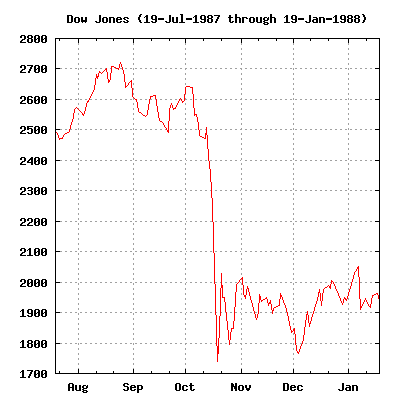
Is that 2008? No, it's 1987. And then, after that, 1998. People, the media especially, are fond of the word "unprecedented". Sure, the current financial crisis is in some ways unique, in some aspects truly different from what had happened before. But it is definitely not the first time that loss of confidence, market panic and loss of liquidity has happened on a mass scale in the economies of the world. Grand old investment banks may collapse, some markets may be nationalised, the financial system might come out looking completely different---but, at the end of the day, life goes on. Deeper shit has happened before, and the world has come out of it alive and, eventually, well. Alarmist rhetoric along the lines of 'we may not have an economy on Monday' is quite uncalled for.
Eric Hobsbawm noted, 12 years ago in the preface to The Age of Extremes, how people today no longer have a sense of the past. Seeing how so many are running around "stunned", "surprised" and "shocked" about the current crisis, as if nothing like it had happened before, surely vindicates his argument that we are sorely in need of a sense of historical perspective.

And that, by the way, was the hundredth post.

Mission Statement

I will expand the realm and widen the horizons of human possibility. I may help individuals do that, by helping them see new perspectives, achieve new vistas, attain the dazzling heights of their potentials; or, if I can, humanity as a whole, by building on and further creating human knowledge, by bringing fresh and illuminating perspectives to bear on the existing.

To do so, you will need to expand your own horizons as far as possible first, in every sense of that word. You should learn as many sciences and arts and skills as you can, and read and travel widely. Talk to people, no matter how different, and try your best to communicate and connect with them. Then build on these. Push a bit further, and glimpse just beyond the current limits of the horizon. Tell others just how wide their horizons could be.

I am not a hedonist in any sense of the word. I do not crave material enjoyment for its own sake, nor will I hoard present knowledge for the sake of merely appreciating it without further building on it.

So. That was a lot of big, fluffy words. What concrete thing are you doing today to work towards your mission?

Hypocrisy, or variation on Edmund Burke

(Notwithstanding the fact that the quote I'm about to attribute to him might not actually have been something he said)

Hypocrisy is a product of laziness, not a deliberate choice. People don't choose to be hypocritical; they're only too lazy to hold themselves to the same exacting standards as they demand of others. Or they adhere to fashionable or orthodox viewpoints, and conveniently neglect to sort out the troublesome conflicts between those viewpoints and their own beliefs and actions.
Hypocrisy is a disgusting creature. But it may be an altogether accidental one.
Burke (may or may not have) told us that, "The only thing necessary for the triumph of evil, is for good men to do nothing." Now it seems that the only thing necessary for one to be evil is for one not to do anything to be good.

Subscribe to This V3R or Carry On Twenty

V3R here referring not to the Motorola RAZR phone, but to "shared Vision, Rules, Roles and Relationships"---the tenets of the SAF's supposed team-building model. Every NSF in the Army now would have gone through at least two sessions in which their section / platoon / syndicate would be asked to sit around and discuss their vision for the course / posting and set down rules, describe roles and decide how they wanted their relationships to be, in order to achieve that vision. On paper, that is a Very Good Idea. Discussion produces synthesis, produces agreement, promotes participation and involvement. But it never quite works out. The "shared vision" usually ends up as a bland, unwieldy pastiche of generic, undescriptive homilies. Something that people would hesitate to believe in whole-heartedly even if they wanted to. The rules and roles are glossed over briefly, and a less unwieldy but no less bland homily stands in to describe the rules of conduct for "relationships". Hardly anyone is willing to put in the necessary effort needed to produce genuine synthesis, consensus and agreement. Instead, the participants invariably agree to cut short the session so that everyone can go for lunch, and acquiesce in the first semblance of a compromise that can be formulated. More time is needed, if it is really to be a Very Good Idea.
How many people really do partake in a Shared Vision, at the end of this somewhat farcical process? Not many, surely. And if that is the answer, how can the description, "Shared Vision", still stand, when it is only shared by so few of the people it should be shared amongst?
This isn't just a problem that presents itself in the narrow circle of Singaporean NSFs. Humankind could achieve so much if it were united in purpose---but, of course, we are not. We are all individuals with our own individual dreams and purposes, and these will invariably clash at times. And compromise and true alignment of purpose takes time and effort---plenty of both. Which means, considering how stingy people usually are with either of those, it doesn't happen.
Where shared intent fails, there arise incentive structures. That's why incentive structures pop up everywhere in human society---because shared intent fails so often. Think of all the instances where incentive structures are inducing people to align their actions with others' vision and intents: push-ups for not following your platoon sergeant's injunction to move fast, or execution by hanging for drug trafficking, or a potential $5 gain for selling that book you're not going to read again to a willing buyer, even though you're not particularly into sharing books. The spirit of Adam Smith still trumps that of Marx at resource allocation any day.

State of (dis)orderliness.

This is my desk on October 4. It is completely indicative of the mess my life is in.


This is the same desk on October 12. With some minor adjustments, a semblance of order has been restored. However this order is superficial and precarious. A little neglect or additional input is all that is needed to return the desk to its previous chaos.

Forecast for October to November: Generally much calmer. Mild to moderate fog. As before, occasionally sunny.

Friday, October 03, 2008

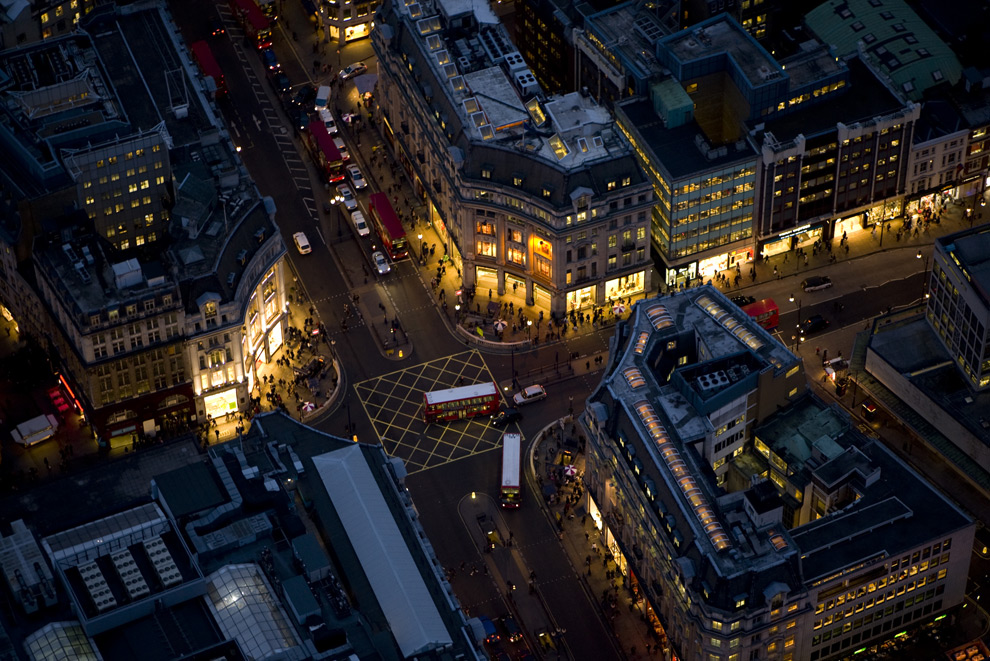
Wow. Unreal.

These photos of London really make the visual gap between real cities and SimCities just about close to zero. Just look at this photo of Oxford Circus ...

Sunday, September 28, 2008

Homeland (II)

Note, the word is homeland. Not home-state, not home-nation. Homeland. Our homes are specific, physical places on Earth, not mental constructs. Which of course makes a lot of sense, because our bonds are attachments are born of concrete memories, of specific places and people and occasions. Not, in the first instance, of some abstract notion of loyalty or duty to the abstract institution of the state or the abstract community of the nation.
Following similar logic, the word country originally referred merely to a piece of land, and only afterwards developed its political meanings. Maybe it's not such a bad placeholder word for places where neither 'nation' nor 'state' seems to fit very well.

Flâneur

What an interesting concept, don't you think? 'A flâneur is thus a person who walks the city in order to experience it', and, by extension, a complex composite of observer and participant. Or maybe Skinner put it better by describing him as a 'deliberately aimless pedestrian, unencumbered by any obligation or sense of urgency'. Wouldn't it be nice to live life as a flâneur?

三百六十行,行行出状元

' ‘I do what I do because it is the one and only thing that I can do at all well. ... ’
I am not suggesting that this is a defence which can be made by most people, since most people can do nothing at all well ... It is a tiny minority who can do something really well, and the number of men who can do two things well is negligible. If a man has any genuine talent he should be ready to make almost any sacrifice in order to cultivate it to the full.
This view was endorsed by Dr Johnson --
When I told him that I had been to see [his namesake] Johnson ride upon three
horses, he said ‘Such a man, sir, should be encouraged, for his performances
show the extent of the human powers ...’—
and similarly he would have applauded mountain climbers, channel swimmers, and blindfold chess-players. For my own part, I am entirely in sympathy with all such attempts at remarkable achievement. I feel some sympathy even with conjurors and ventriloquists and when Alekhine and Bradman set out to beat records, I am quite bitterly disappointed if they fail. And here both Dr Johnson and I find ourselves in agreement with the public. As W. J. Turner has said so truly, it is only the ‘highbrows’ (in the unpleasant sense) who do not admire the ‘real swells’. ' (GHH 67-9)

Tuesday, September 23, 2008

Nexus

a) A link or tie, or b) a centre or core. See how important connections are in the grand scheme of things?

Saturday, September 20, 2008

Transition into new job

Not altogether smooth, really. But I think it's easing up now. Spots of the past week, recorded as handphone memos at odd times:
Not sure what to do, sense of uselessness
Just don't want to book in, wake up early, have to face the platoon and section the whole day. And my colleagues and the PC and the OC.
Damnit the highbeams are blinding me.
It's only as stressful as you make it out to be, really.
But it's a bit easier to work now that the recruits aren't so stunned and actually respond a bit. Discipline is still a problem though. Need to learn to start scolding and punishing soon ... unfortunately.
And yes, your voice is incredibly flat. After talking to the whole platoon for a while it becomes a downer even to yourself. Work on it, please.

What actually happens during regimental duties.

I typed this out as a memo in my handphone while doing guard duty at Rocky Hill Camp on the seventh of this month:
One o'clock at training shed next to Zulu coy sitting and staring at a whiteboard in the darkness, waiting for the shift to end at two.
[My buddy was playing his PSP]
We were just observing the norm. Really.

Sunday, September 14, 2008

Even if you don't like the System

'This appointment [at the composers' union, given by Stalin], coinciding with Stalin's campaign against “formalism” and “rootless cosmopolitans” proved as much a curse as a reward. Mr Khrennikov was only 35; his career was young. “I want to write music. What am I to do?” he asked Alexander Fadeev, the head of the writers' union, as both men waited for their special food parcels. "Connive,” replied Fadeev.

Mr Khrennikov did so. ... For all his rhetoric, he attended Prokofiev's funeral in 1953 and helped his first wife when she came out of prison. Though he publicly disliked the avant-garde music of Alfred Schnittke, he was among the first to help Schnittke when he suffered a stroke in 1985. And he was instrumental in inviting Igor Stravinsky to Russia in 1962.

He was part of a ruthless system; but he did not deliver up Jewish composers to Stalin's goons, and did not write negative references when the party demanded them. (Instead, he would say that the composer had been warned of the dangers of modernism, as if the lesson was already safely learned.) None of the composers he had charge of was killed; very few were arrested. Many, however, reported on him—for being influenced by his Jewish wife, Klara Vaks, and for sheltering Jews. But Stalin's approval gave him a certain freedom. Instead of writing hymns to his boss, like many of his peers, he made songs about the soft light in Moscow windows.

Having made himself comfortable within the regime, he extended these comforts to others. The Soviet Union looked after its artists well. Mr Khrennikov had a huge budget which was spent on building special apartments and dacha compounds for composers. The world he created behind the gates of the Ruza compound by the Moscow river, where among small lanes and woods “his” composers could find a strange, beguiling privacy, was much more tolerant than the country. The Western press called him a lackey and dictator when he died, but Russians, who knew him, did not.'

From the obituary of Soviet composer Tikhon Khrennikov in The Economist, August 30, 2007. The full text is available online (not entirely legally) in a forum here.

Petty motvations ...

... may well lead to something else.
Remember the case of the fugitive police sergeant? (The first item in this post) Now he's no longer a fugitive.
Now the whole thing seems to be less dramatic than it was first made out to be. Or actually, no, that's not too true. Only now the picture is more complete, and we are made aware of the possible role of the personal, more banal, motivations of the main characters involved. Thus Yang may have been encouraged to report the misdeeds of his superior as much to gain an one-up on him as to uphold justice, and his superior to retaliate more in response in this game of one-upsmanship than for motives dark and sinister.
Of course, in the final analysis, the misdeeds perpetuated by the superior might well lead to misery and suffering -- or less dramatically more petty lawlessness. And the public controversy over the Diary published online may, hopefully, lead to increased scrutiny of and transparency in the workings of the Chinese police. If the current outcry over melamine-tainted milk powder does not compeltely eclipse the subject, that is. Doesn't the whole episode remind you of Thomas Carlyle's dictum that history is mostly driven by individual actions? Or Hannah Arendt's banality of evil? Petty motivations drive individual actions which interact to produce significant social consequences and phenomena.

(Admission: both ideas got slightly twisted in the last sentence)

Saturday, September 06, 2008

It ain't over until it's over.

The parents were wondering over the dinner-table the other day, 'What's wrong with Thailand again?' Well, nothing is wrong there again. Only that General Sonthi's coup did nothing to fix or alleviate the underlying structural tensions which created the first round of huge protests which ousted Thaksin. So now we have a second round of huge protests ... or rather, a continuation of the first round after the slight hiatus effected by the coup.
It must be painful for the country. To spend so long engaged in a heated argument within itself. Come on. Stop stalling and move forward already.

There are more things in Heaven and Earth ...

And today we bring you three of them, courtesy of Global Voices Online.

1. A fugitive sergeant's diary
(No, not referring to yours truly in anyway.)
Exciting. And a little unreal.
More later.

2. Can you believe that these things were built in the 1970s?

3. Are you addicted to instant noodles?

Then consider visiting the instant noodle museum in Osaka.

Sapir, Whorf, Chomsky and Bach

Messeiurs Sapir and Whorf gave us the thesis that language shapes our thinking. That thesis is often associated with, or forms the base for, the postulate that thinking is dependent on natural language, or that the brain actually does its thinking in English, or Chinese, or Arabic, and the scope of its thought is limited by the scope of the language.
Chomsky disagreed and posited that thought is not conducted in natural language, but in a sort of universal 'mentalese', an innate language of the brain. This would imply, inter alia, that thought is not restricted by language, but expands beyond it.
Now, listen to Bach's Goldberg Variations.

Don't you get the feeling that the music is speaking to you the listener, and clearly describing a state of mind or atmosphere, but that it is not quite possible, or at least very difficult, to nail down precisely what it is describing in words alone? As though it formed a description of the world that could communicate itself to the conscious mind without using language. It would seem to support Chomsky's opinion. Or maybe it's just me.

A fortnight spent listening to Senior Personnel

Some of whom, of course, were better speakers than the others. The parts I remembered most vividly, nonetheless, were not necessarily presented by the best speakers. They were the real-life anecdotes which some of them sprinkled to underline their point. Some of them were really inspiring, even if they were not particularly well presented. Such as the Commando Encik who insisted on running a 100km ultramarathon despite suffering from food poisoning, and who eventually helped his team clinch second overall. They were all the more inspiring for having been real, for having the added dimension of sincerity as compared to all the dry and 'airy' theory that formed the bulk of the presentations.
The other strong impression I got was that all the theory and skills we were being taught were no more than common sense, only now put into a framework, given some structure. Neuro-Linguistic Programming, in particular, although that might have been because we were taught a simplified and somewhat bowdlerised version of that. Maybe that is what knowledge and wisdom are after all: only the conscious, systematic organisation of what we naturally know as common sense into frameworks and structures. Or maybe common sense is just a chimera. As Voltaire put it, 'On dit quelquefois: "Le sens commun est fort rare."' : 'Common sense is not so common'.