Travellers to the Mekong region are advised to have quantities of three to five kinds of inactivated viruses inserted into their bodies, and to ingest a synthetic analogue of a bitter toxin on a weekly basis. The toxin may cause nausea, vomitting, lung failure, depression, seizures and suicidal intent, but these are not reasons to stop its regular intake.*
* Actual potential risks associated with Lariam, though not so common as to be alarming.
Monday, December 21, 2009

Thursday, December 10, 2009
Bad Pun of the Day
When you're participating in a marathon, running into people takes on an altogether more literal meaning.
Tuesday, December 08, 2009
Fluke Finish of 42.195km
Now that it's done, I still don't know why I wanted to run a marathon. At least the feeling at the finishing line was priceless ... especially coming after an epic two-hour battle with muscle aches.
How do people complete ultramarathons? I can't even imagine ...
Mind over body, by the way, is quite a misleading cliché. It should be mind and body. Because mental strength does matter, but if the flesh is just too weak, sheer determination alone can't make miracles happen.
How do people complete ultramarathons? I can't even imagine ...
Mind over body, by the way, is quite a misleading cliché. It should be mind and body. Because mental strength does matter, but if the flesh is just too weak, sheer determination alone can't make miracles happen.
Friday, December 04, 2009
Wednesday, November 25, 2009
Tuesday
Monday was someone's birthday, but then he was learning to navigate masses of steel and aluminum along bitumen surfaces. So the lunch was on Tuesday instead, at Maxwell Food Centre. What a choice of place, but there was a famous chicken rice stall there. True to reputation the queue stretched all the way around the corner, and we waited around 15 minutes before reaching the front. Then we took another 5 minutes to find a seat. (Tissue paper packets used to chope seats are so very irritating. Grr.) The chicken rice was quite outstanding, though it could've been even better. The birthday boy commented that it was "over-rated". Possibly, yes.
After lunch we visited the Singapore City Gallery, since it was just next door and admission was freeand both of us happen to be unemployed and therefore rather free at the moment. If you ever start to doubt that Singapore is still very much controlled by the Government, the Gallery is a good place to be reminded otherwise. Where else in the world does government plan and regulate land use so tightly, with such detail and thoroughness? Manhattan and the neighbourhoods of San Francisco arose entirely organically, and Europe's grand old city centres resulted more from historical evolution than government fiat, and both continue to be regulated with a light hand. Here, though, the whole environment, down to that bench in the park and the surrounding plants, is micromanaged by the government. This place is a SimCity on more than just a surface level.
After lunch we visited the Singapore City Gallery, since it was just next door and admission was free
State of the Desk
It's actually clear! It's the dawn of a new era!

Just see the difference from before ...


Wednesday, November 11, 2009
Balls to the Wall
Even with the murky waters of Cold War geopolitics which gave birth to and sustained the Wall in mind, and the tremendous social and economic dislocations that have accompanied the collapse of socialist economic systems and German reunification, we should still celebrate the fall of the Wall.

Because even though, in the poisonous atmosphere of Cold War mistrust, the Wall helped to avert a more serious confrontation between the USSR and the US, even though the US may have acquiesced in its construction and maintenance precisely for this reason, even though German reunification in the wake of its fall has been less than an unqualified blessing, it has always been fundamentally a stopgap measure born, at root, of misunderstanding, mistrust, miscommunication.
Miscommunication, misunderstanding and mistrust. Why should the East German regime have stopped free movement of people to, and from, the West, if it did not mistrust the West? If they did not want to restrict communication with the West? And such mistrust was born precisely out of miscommunication and misunderstanding between the superpowers, whose wariness of each other escalated out of all proportion into a worldwide shadow-play of power which left grotesque monuments the world over, of which the Wall was only one.
It was not only a monument to mistrust, but also a stopgap measure unsustainable in the long run. When there are such great economic and socio-political differentials as existed at the time between East and West Berlin, it is ultimately futile to try and stop the free movement of people in the direction of the differential. It's just like trying to stop a current flowing across a great potential difference, or, to take a slightly closer analogy, trying to prevent goods from moving to where prices for them are very much higher. It could be done, but you'd have to expend a lot of effort and resources in the process. So much effort, sometimes, it wouldn't make sense to try.
So even if the common portrayal of the fall of the Wall as being symbolic of the triumph of democracy and freedom over tyranny is romanticised and oversimplified, still we should see the event as a vindication of common sense and of free movement and open communication. Still something worth celebrating.

Miscommunication, misunderstanding and mistrust. Why should the East German regime have stopped free movement of people to, and from, the West, if it did not mistrust the West? If they did not want to restrict communication with the West? And such mistrust was born precisely out of miscommunication and misunderstanding between the superpowers, whose wariness of each other escalated out of all proportion into a worldwide shadow-play of power which left grotesque monuments the world over, of which the Wall was only one.
It was not only a monument to mistrust, but also a stopgap measure unsustainable in the long run. When there are such great economic and socio-political differentials as existed at the time between East and West Berlin, it is ultimately futile to try and stop the free movement of people in the direction of the differential. It's just like trying to stop a current flowing across a great potential difference, or, to take a slightly closer analogy, trying to prevent goods from moving to where prices for them are very much higher. It could be done, but you'd have to expend a lot of effort and resources in the process. So much effort, sometimes, it wouldn't make sense to try.
So even if the common portrayal of the fall of the Wall as being symbolic of the triumph of democracy and freedom over tyranny is romanticised and oversimplified, still we should see the event as a vindication of common sense and of free movement and open communication. Still something worth celebrating.
Monday, November 02, 2009
For All the Wrong Reasons
I never expected writing a cover letter to be so exhausting. Either it was a misguided decision, or I just need thicker skin.
Sunday, November 01, 2009
Leaving a Mark


Sunday, October 25, 2009
Sensitive
Being sensitive could mean being especially prone to be affected, being vulnerable in a way. But it could also mean being particularly quick to perceive and accommodate. A suggestion that vulnerability leads to empathy, perhaps. Or, from an etymological point of view, that the ability and inclination to sense and feel lie at the root of both ...
Sunday, October 18, 2009
Asses for Zebras

On an off note, the Old Portuguese zevra, which gave rise to the zebra's name in English and many other languages, did mean "wild ass". So the choice of stand-in was perhaps not so inexplicable ...
Saturday, October 17, 2009
Narcocracy
Isn't it ironic that the word can mean both a group responsible for enforcing laws governing (usually against) narcotics, and a dominant or governing group whose wealth derives from those very same substances? Might this not be a critique of how criminalisation does not work and is prone to corruption, a subtle suggestion that other approaches, such as legalisation, might work better?
Sunday, October 11, 2009
Why Doctors Earn a Lot
A few Saturdays ago, due to exceptionally poor braking technique on the bicycle, I ended up with some pretty nasty, though ultimately harmless, injuries. As luck would have it, the batch of recruits we were taking then were due to have their Graduation march and parade the following Monday. It seemed to me a very bad idea to try and wear a LBV when there was a big open wound on one shoulder, so I took medical leave for the first time since enlistment. Geez.
I had to pay the doctor a good fifty dollars. It seems terribly expensive. The doctor made only the most superficial and general observations, prescribed a bunch of non-essential medications, most of which I didn't even use in the end, and breezed through any questions. Not to put down the medical profession, but I could have done this particular call myself. The only difference would have been that I wouldn't have had the authority to make out a certificate requesting medical leave. Damnit. I guess it's the price to pay to prove yourself a genuine sick case.
Does it have to be? If integrity were a more common thing in society, perhaps we could trust people to recommend themselves for sick leave without abusing the authority---but of course, History has demonstrated that it is not so wise to trust so much in human nature. That does not rule out exceptions in specific cases, when perhaps a supervisor is willing to accept his/her charge's claims of not feeling well as genuine without a professional opinion, based on the specific circumstances. In general, however, it would seem that the monopoly of the medical profession over medical leave is indeed a necessary evil. It is not a perfect solution---a physician might be inclined to give medical leave out freely to family or friends, for instance---but it's a roughly workable on, and better than nothing. Even if the added content of the "professional" opinion doesn't amount to much, the fact that the patient was willing to go to the trouble and expense of getting it supports the thesis that the medical problem was genuine.
I had to pay the doctor a good fifty dollars. It seems terribly expensive. The doctor made only the most superficial and general observations, prescribed a bunch of non-essential medications, most of which I didn't even use in the end, and breezed through any questions. Not to put down the medical profession, but I could have done this particular call myself. The only difference would have been that I wouldn't have had the authority to make out a certificate requesting medical leave. Damnit. I guess it's the price to pay to prove yourself a genuine sick case.
Does it have to be? If integrity were a more common thing in society, perhaps we could trust people to recommend themselves for sick leave without abusing the authority---but of course, History has demonstrated that it is not so wise to trust so much in human nature. That does not rule out exceptions in specific cases, when perhaps a supervisor is willing to accept his/her charge's claims of not feeling well as genuine without a professional opinion, based on the specific circumstances. In general, however, it would seem that the monopoly of the medical profession over medical leave is indeed a necessary evil. It is not a perfect solution---a physician might be inclined to give medical leave out freely to family or friends, for instance---but it's a roughly workable on, and better than nothing. Even if the added content of the "professional" opinion doesn't amount to much, the fact that the patient was willing to go to the trouble and expense of getting it supports the thesis that the medical problem was genuine.
Saturday, October 10, 2009
Unworldly Landscapes


So these landscapes, so relatively rare on the Earth today and thus unfamiliar and "unworldly" to us, belong to the Earth no less than our dear old meadows and woods and tropical rainforests. They are only strange and distant to us parochial humans, in space and, much more, in time. The "world" encompassed in the adjective is a very much anthrocentric one, specific and limited in time and place.
Tuesday, September 29, 2009
It's Perfectly Comprehensible to me
According to this admittedly not-very-scientific mapping from Strange Maps (a really interesting site, by the way), the speakers a lot of languages express bewilderment at something by saying that it is Chinese to them, but the only analogous constructions in Chinese involve things like 天书 and 鬼符。
Is that indicative of superior understanding of other civilisations and their languages on the part of the Chinese? Or just a sign of pride and conceit---we believe no foreign language is beneath our understanding, even though we might not actually understand any? Or is it a result of China's past relative isolation from further parts of the world? Such isolation could have meant that while the few foreign tongues nearby were readily understood, the further ones, which might not have been comprehended so easily, were too distant and rarely encountered to find their way into such expressions of bewilderment.
Is that indicative of superior understanding of other civilisations and their languages on the part of the Chinese? Or just a sign of pride and conceit---we believe no foreign language is beneath our understanding, even though we might not actually understand any? Or is it a result of China's past relative isolation from further parts of the world? Such isolation could have meant that while the few foreign tongues nearby were readily understood, the further ones, which might not have been comprehended so easily, were too distant and rarely encountered to find their way into such expressions of bewilderment.
What Border?
We thought it was a volleyball net ...


"Walleyball" didn't just present a valid point of view, it illustrated it vividly. The scene wasn't of two beaches in two countries with nothing to do with each other; it was of one continuous stretch of beach, with little to set apart the "American" and "Mexican" sides except that huge wooden thing. Why can't someone on one side of the US-Mexico border just walk over to the other side, to say hi to someone else who happens to be there? Except for that huge wooden thing, of course---that, and the whole idea of the closed, controlled border it represents. The narrator said it best: "It doesn't need a wall ... it doesn't need anything. It just needs a little bit of humanity."
A certain T. L. Wiuslow expressed it more radically when he advocated dissolving the border altogether, in something midway between Merger and annexation, in "The Megamerge Dissolution Solution" (warning: long, rambling article). Ignoring a few bits of residual national supremacism, he actually makes a lot of sense; to think about it, it is only a logical conclusion of the Walleyball line of thinking. Given the blockheadedness and prejudice which prevail at present, however, reason and common sense might take a long time to prevail here.
Monday, September 28, 2009
War / Dance
The cinema was quite interesting. It was small: one theatre, with red couches for seats (three to a couch), seating up to perhaps ninety people. From the posters on display in the box office-cum-gift shop downstairs we gathered it showed mainly local films, and some foreign independent films. And it had been set up in an interesting locale: the Old School compound (formerly the Methodist Girls' School campus, now converted to "digs for new school thinkers") was full of artist's studios, with plenty of semi-colonial architecture and inviting open space in between. An artist's colony of sorts---a rare creature in this nation of merchants, though it did seem quite in its natural habitat on quaint, quirky Mount Sophia.


The first was of a convoy of UN container trucks rolling into the refugee camp---now town---of Patongo. 'Every month, the school closes for one day when the UN delivers food to Patongo,' a caption explained. It wasn't just the school, but the whole town which seemed to stop for the supplies. Huge crowds---seemingly the whole population of the camp---gathered in impatient, pushy lines to demand, collect and jealously guard their share. The camera cut to show a child picking up from the ground grains of cassava which had dropped out of a sack. Why, in today's rich, industrialised, modernised world of plenty, should whole villages and districts be reduced to this kind of rationing? Not that the people seemed malnourished, but compared to the commercial plenty in so many other parts of the world, even in the Ugandan capital, it seems such a primitive and disruptive method of distribution.
The second was of the children of Patongo performing their traditional dance in the finals of the National Competition. 'When I dance I feel good,' a voice-over from one of the performers pipes in, 'I am more than a child of war ... I am strong. I am Acholi.' It reflects how it is not, perhaps, the music and dance itself, but rather the bonding with others---with a larger, deeper culture and heritage created and shared by others---through the music which is more therapeutic and healing. The intricate structure and euphonious sounds may soothe and provide distraction, but in this case the social connotations, not denotations, of music probably matter more.
And a lingering mystery ... the Lord's Resistance Army, whose somewhat random but horrific acts of violence form the backdrop of the documentary. They appear to be an Acholi rebel group which originated in a general insurgency against a presidential coup by another tribe but ended up attacking their own tribe when support for their cause wavered. Their present motivations may be unclear, but the nature of their atrocities is unambigiously outrageous. They are now surrounded, outnumbered and outgunned, by the Ugandan military, yet their leader refuses to negotiate, and has allegedly killed a deputy who tried to do just that. They may as well be an organised bunch of crazed lunatics, haunting the northern Ugandan bush at random.
Tuesday, September 22, 2009
Someone Else Willing
Apparently it's not only Muslims and Arabs who are free to invoke insy'Allah. Christians may (but increasingly do not) avail themselves of the Latin deo volonte, or the abbreviated d. v. if convenience demands.
Sunday, September 13, 2009
National Day of Service and Remembrance
It may be slightly unwieldy a name, but wouldn't it be better for everyone if September 11 were remembered in this spirit, instead of the distinctly parochial, closed, mailed-fisted spirit lurking just behind "Patriot Day"? If Americans would forget their wrath which has brought so much more disquiet and suffering to the world, and recall instead the noble deeds that allowed them to prevail, and then remember, in humility, that they are scarcely alone in their suffering?


Friday, September 11, 2009
A Democratic Spirit
The belief that truth is manifest is the basis of all tyranny - Sir Karl Popper (?)'The truth can only be found by a critical process, by a creative process, by a process that is open, and our only criterion for whether one idea is better than another is whether we prefer it.'
Or, actually, if we take this view, there is hardly any room for an objective conception of truth anymore, won't you think? When the only criterion for judgement is subjective, when anything and anyone's contributions can be equally valid.
But maybe that was the whole point: it is far better to resolve differences and conflicts at hand and work things out, than to get entangled in intractable tussles over a slippery notion of abstract truth. And besides, wouldn't any definite choice of criteria be somewhat an arbitrary imposition on an otherwise open critical and creative process?
Thursday, September 10, 2009
En pantoufles
Freely, easily, in as relaxed a manner as would be suggested by someone ambling around lazily in slippers, like Singaporeans do almost everywhere. We must be one of the most relaxed nations on Earth, by the standards of this French idiom ...
Advienne que pourra!
Fais ce que dois ... not just a moral injunction, but a steely declaration of determination: come what may! A almost devil-may-care reckless perserverance in one's rightful duty ...
Wednesday, September 09, 2009
Lares and Penates
In Roman mythology, lares were minor deities who guarded homes, crossroads and cities. Penates were in charge of the pantry and the household. 差不多就像地方神和灶神。The Romans and their descendants must have loved these small gods dearly, for lares and penates now refers to one's treasured household possessions.
Barenboim's Orchestra for Peace
If Longfellow was right about music being humanity's universal language, the West-Eastern Divan is a very encouraging project.
Barenboim says he founded the extraordinary youth orchestra as a 'project against ignorance', 'a platform where the two sides [Israelis and Palestinians] can disagree and not resort to knives.' He believes, quite deeply, music can teach the two sides about compromise and working together.
A lot of the "music as a model for life" stuff may be waffly and too steeped in metaphor to have much meaningful impact in the hard real world of international conflict and geopolitics. But the opportunity afforded by the orchestra for the two sides to sit down and work together towards something peaceful, productive, and beautiful---that could help, slowly but surely, in building up relationships and trust between them. If only there were more such initiatives ...
On a separate note, isn't it supremely fitting for the orchestra to be based in Seville? The capital of Andalusia, once a bastion of tolerance for Muslims, Jews, Christians and all other peaceful comers.
Barenboim says he founded the extraordinary youth orchestra as a 'project against ignorance', 'a platform where the two sides [Israelis and Palestinians] can disagree and not resort to knives.' He believes, quite deeply, music can teach the two sides about compromise and working together.
A lot of the "music as a model for life" stuff may be waffly and too steeped in metaphor to have much meaningful impact in the hard real world of international conflict and geopolitics. But the opportunity afforded by the orchestra for the two sides to sit down and work together towards something peaceful, productive, and beautiful---that could help, slowly but surely, in building up relationships and trust between them. If only there were more such initiatives ...
On a separate note, isn't it supremely fitting for the orchestra to be based in Seville? The capital of Andalusia, once a bastion of tolerance for Muslims, Jews, Christians and all other peaceful comers.
Montero's Fantasie-Impromptu
'
"Improvisation on Goldberg Variations"? I think Fantasie-Impromptu would have been a more appropriate title for an extempore burst of music of this length, coherence and sophistication. Besides it is stylistically so far away from Bach's original ...
"Improvisation on Goldberg Variations"? I think Fantasie-Impromptu would have been a more appropriate title for an extempore burst of music of this length, coherence and sophistication. Besides it is stylistically so far away from Bach's original ...
Live Tetris!
Using a high-rise dormitory block as the playing arena! w00t. Now what if we wired all the lighting systems to a Playstation or XBox controller, programmed the linked system to generate Tetris games, and really played Tetris? It would look pretty darned grand. Though perhaps not if you were inside one of those rooms ...
Tuesday, September 08, 2009
Pianism
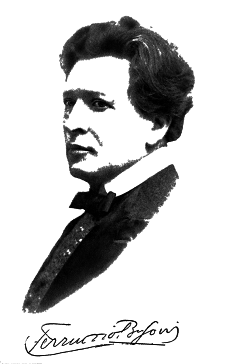
Cipher

Monday, September 07, 2009
Remember, remember ...
Whereas at the end of the war many Germans tried to hide their passports or to exchange them for another one, German nationality today is highly valued.from Richard von Weizsäcker's speech commemorating the 40th anniversary of VE Day in 1985.
We certainly have no reason to be arrogant and self-righteous. But we may look back with gratitude on our development over these 40 years, if we use the memory of our own history as a guideline for our future behavior.
If we remember that mentally disturbed persons were put to death in the Third Reich, we will see care of people with psychiatric disorders as our own responsibility.
If we remember how people persecuted on grounds of race, religion and politics and threatened with certain death often stood before the closed borders with other countries, we shall not close the door today on those who are genuinely persecuted and seek protection with us.
If we reflect on the penalties for free thinking under the dictatorship, we will protect the freedom of every idea and every criticism, however much it may be directed against ourselves.
Whoever criticizes the situation in the Middle East should think of the fate to which Germans condemned their Jewish fellow human beings, a fate that led to the establishment of the state of Israel under conditions which continue to burden people in that region even today.
If we think of what our Eastern neighbors had to suffer during the war, we will find it easier to understand that accommodation and peaceful neighborly relations with these countries remain central tasks of German foreign policy. It is important that both sides remember and that both sides respect each other.
If you accept that humankind is possessed of free will and can meaningful control its own thoughts and actions, there should be no reason why we cannot learn from history.
Sunday, September 06, 2009
Air and Simple Gifts
Forgetting the whole brouhaha about the performance being pre-recorded, the performance of John William's Air and Simple Gifts has plenty of aspects which speak of America's strengths.
The musical material was drawn by Williams from his compatriot Copland, and had originated from a Shaker hymn. What does this tell us? No doubt, that America, a young nation though it may be compared to Europe's grand old dames, has a considerable cultural heritage.
The performers, all world-class masters in their instruments, were all American by descent or choice, and represented four different ethnicities. Could the implication be any clearer? America has drawn, and continues to draw, the best talent from all over the world, and to produce its own talent too.
A Case for Gun Control
A favourite argument of pro-gun advocates is that allowing the common citizen to carry arms is a deterrent to violent crime: criminals are less inclined to perpetrate on people who may be able to retaliate with firearms. Anti-gun advocates retort that an increased prevalence of firearms actually increases rates of violent crime, in particular shootings, by making both criminals and potential victims reckless and trigger-happy: maybe he has a gun, but then I do too---let's just do it.
Since the renewal of violence in southern Thailand in 2004, Thai government programmes arming civilian militias have led to a huge influx of firearms into the region. An accompanying increase in shootings in the region suggest that the anti-gun advocates' argument is closer to the mark of reality.
 Of course, the chain of causation may run the other way round: a culture of violence, fueled by unresolved local squabbles and encouraged by recent militantism, creates a strong incentive for arms-traders and smugglers to bring firearms into southern Thailand. The government programmes were only the spark which unwittingly opened the floodgates for these firearms to flow in freely, driving the violence which may have previously lain latent.
Since the renewal of violence in southern Thailand in 2004, Thai government programmes arming civilian militias have led to a huge influx of firearms into the region. An accompanying increase in shootings in the region suggest that the anti-gun advocates' argument is closer to the mark of reality.

Saturday, September 05, 2009
The Onion: Very Reliable News Source
The next time you peruse The Onion News Network's satire, you would do well to remember that however many facts it may incorporate, it's not actual news. Don't do what two Bangladeshi newspapers did, and run a story from the Onion in an actual newspaper: 'Neither they nor the New Nation, which later picked up the story, realised the Onion was not a genuine news site.'
Although, considering the conspiracy theories that surround the moon landings, might the Onion story not have been that off?
Although, considering the conspiracy theories that surround the moon landings, might the Onion story not have been that off?
Sunday, August 23, 2009
Search for Primes @ home
The SETI@home programme harnessed the idle computing power of millions of home users to aid the Search for Extra-Terrestrial Intelligence. Now, PrimeGrid is doing the same for the search for large prime numbers.
Prime numbers are a major area of interest in number theory. There are various subareas---the study of prime numbers having certain specific properties of interest---and corresponding search efforts in these subareas; many of these work in collaboration with PrimeGrid, which is the overall effort.
There are differences between PrimeGrid and SETI: whereas SETI takes data from the Arecibo radio telescope and distributes it among its network of home computers, PrimeGrid need only tell each computer which numbers to check---it only coordinates, whereas SETI has to supply the data in the first place. But the two programmes are essentially similar in nature: large amounts of data are distributed to be checked thoroughly for faint signals within.
What can it mean when we employ essentially similar methods to search for primes as we do to search for aliens? I say it shows that our knowledge of both is at a similar stage. We can recognise one when we encounter one, and can search for them systematically, but we have no idea where to find them until we actually find them. Are certain conditions necessary for the existence of life? We have yet to find out, and until then we can only poke haphazardly around the Universe hoping to find extra-terrestrial life. Is there a structure to the location of primes among the natural numbers? We have yet to discover it, and until then we can only check the natural numbers individually to find the primes.
Prime numbers are a major area of interest in number theory. There are various subareas---the study of prime numbers having certain specific properties of interest---and corresponding search efforts in these subareas; many of these work in collaboration with PrimeGrid, which is the overall effort.
There are differences between PrimeGrid and SETI: whereas SETI takes data from the Arecibo radio telescope and distributes it among its network of home computers, PrimeGrid need only tell each computer which numbers to check---it only coordinates, whereas SETI has to supply the data in the first place. But the two programmes are essentially similar in nature: large amounts of data are distributed to be checked thoroughly for faint signals within.
What can it mean when we employ essentially similar methods to search for primes as we do to search for aliens? I say it shows that our knowledge of both is at a similar stage. We can recognise one when we encounter one, and can search for them systematically, but we have no idea where to find them until we actually find them. Are certain conditions necessary for the existence of life? We have yet to find out, and until then we can only poke haphazardly around the Universe hoping to find extra-terrestrial life. Is there a structure to the location of primes among the natural numbers? We have yet to discover it, and until then we can only check the natural numbers individually to find the primes.
Saturday, August 15, 2009
'But why?'
 Actually, that was a Very Good Question. Because I don't really know. Of course there are replies that come to mind, but the dim hesitation that you sometimes feel towards them are a sure sign that they are more excuses than reasons. They may not be very flimsy, indeed some of them are probably pretty convincing, but at heart you don't really believe in them---they aren't your real motivation. I don't think you'll ever fathom that. So the recent turn of events is by no means a definitive answer, but only another chapter in the long, convoluted narrative that is your tussle with the concept of identity ...
Friday, July 24, 2009
All Hail the Sun
 A pity we were way too close to the Equator to see anything. The total solar eclipse also had the quite spectacular effect of temporarily turning a large part of China and the Southern China Sea into what looked like a huge inky void.
Thursday, July 23, 2009
40 Years of Humbling Perspective
 The Apollo Moon landings were a tremendous achievement, a triumph of technology and sheer human will ... something well worth celebrating. But just as the view of Earth from space gave the pioneers of Apollo a new sense of perspective and a profound sense of humility, so the 40th anniversary of the landings should giev us occasion for sombre reflection and serious contemplation rather than just smug self-congratulation. Seeing the Earth as a small blue marble must have impressed indelibly upon Apollo's astronauts the vastness of the cosmos and the tinyness of our place in it; our knowledge of this, along with the vast regions and possibilities of space still unexplored even today should spur us on to further questioning, exploration and wonder.
 It is heartening to see that NASA's celebration activities have focussed on the future rather than the past, in the true spirit of exploration and science, highlighting the questions and possibilities that have risen from Apollo's accomplishments rather than what has already been done.
Monday, July 20, 2009
Nature Presents its Data
The manifold patterns that clouds form in the sky aren't just subjects for aesthetic appreciation, they 'are nature’s way of drawing in the sky the physics of what exactly is going on in the air ... If you can reduce their shapes and patterns to numbers and plug them into mathematical formulas, perhaps you can predict the weather, or even forecast changes in the climate.' You can see the interface at work in NOAA / NASA's jointly-produced animation of the 2008 hurricane season. It's certainly a pretty interface, although we're still not too adept at reading it intuitively ...
But then again it must be difficult to design an interface anywhere near intuitive when the data to be presented is so myriad and complex. It applies to other masses of data too---Gapminder World, a fine example, tries to intuitively present socio-economic time-series data across countries and regions. A successful interface would achieve more than just look good: it would help make sense out of raw information; it would help us make use of the data productively in a way that a poorly-presented version could never hope to do. Sometimes presentation really does make all the difference.
But then again it must be difficult to design an interface anywhere near intuitive when the data to be presented is so myriad and complex. It applies to other masses of data too---Gapminder World, a fine example, tries to intuitively present socio-economic time-series data across countries and regions. A successful interface would achieve more than just look good: it would help make sense out of raw information; it would help us make use of the data productively in a way that a poorly-presented version could never hope to do. Sometimes presentation really does make all the difference.
A Timeless Tapestry
What if time did not really exist as we intuit it? What if were just another dimension out of four, not so very different from the three space dimensions we roam freely in, except in the regard that we did not have the facility to move around so freely in it?
If the entire history of our universe were only a 'tapestry of motion woven with the world-sheets of the strings', so that we live in an essentially 'frozen Universe, viewed from the perspective of a photon,'---since photons move at the speed of light, by relativistic time dilation they do not experience time at all, nor space; they are everywhere at once---'in which neither time nor space has any meaning, and everything that ever was or ever will be just is'?
That would give determinism a whole new twist. But if we never could know, if our movement in the fourth dimension is really fixed and restricted in such drastic ways, would that matter? We are not photons, and we could never be in every place or time at once. The future is still a mystery to us, even if we can say that it has been fated. Our lives are still unfolding, not spread out in plain sight before us. Such a radical view of time could even be liberating instead of suffocating.
If you believed hard enough in it, maybe you could draw solace from it, as Einstein did: when his lifelong friend Michele Besso died in 1955, he wrote a letter consoling Besso’s family: “Now he has departed from this strange world a little ahead of me. That means nothing. People like us, who believe in physics, know that the distinction between past, present, and future is only a stubbornly persistent illusion.”
(quotes in second paragraph drawn from John Gribbin's In Search of Schrödinger's Kittens)
If the entire history of our universe were only a 'tapestry of motion woven with the world-sheets of the strings', so that we live in an essentially 'frozen Universe, viewed from the perspective of a photon,'---since photons move at the speed of light, by relativistic time dilation they do not experience time at all, nor space; they are everywhere at once---'in which neither time nor space has any meaning, and everything that ever was or ever will be just is'?
That would give determinism a whole new twist. But if we never could know, if our movement in the fourth dimension is really fixed and restricted in such drastic ways, would that matter? We are not photons, and we could never be in every place or time at once. The future is still a mystery to us, even if we can say that it has been fated. Our lives are still unfolding, not spread out in plain sight before us. Such a radical view of time could even be liberating instead of suffocating.
If you believed hard enough in it, maybe you could draw solace from it, as Einstein did: when his lifelong friend Michele Besso died in 1955, he wrote a letter consoling Besso’s family: “Now he has departed from this strange world a little ahead of me. That means nothing. People like us, who believe in physics, know that the distinction between past, present, and future is only a stubbornly persistent illusion.”
(quotes in second paragraph drawn from John Gribbin's In Search of Schrödinger's Kittens)
Own Time Own Target
It was actually quite funny, though perhaps a little towards the slapstick side ... '"So, what would you like to to say about your men?" "They are a bunch of chee ... ... ampions."' But it seemed to capture so much of the NS atmosphere ... a mixture of coarseness, sian-ness, cock-ups, petty sqabbling and good old camaraderie.
It would be quite sad if Singapore's top brass really were but a bunch of work-avoiding, know-nothing goofers, or if the media were as muzzled as it was made out to be in Full Tank ... but it's probably just exaggeration for a good purpose. The intent of satire is after all to correct by exposing to ridicule.
Watching Botak Boys, on the hand, was a little like watching my own life from a different perspective, although the plot focus wasn't entirely on BMT per se. It's a useful thing, and not the least uninteresting either, to look at the same things you see every day through different eyes sometimes. You notice things you usually might not, or things just appear in a new light, different relief. In this case, I think the most salient point was how arbitrary, and sometimes dehumanising, BMT can seem to recruits; and hence the importance of conducting it in such a way as to diminish or counteract this impression ... and to think BMT instructors had once been recruits before too. Strange. It's almost as though empathy doesn't extend through time ... or perhaps it is just far too weak against the combination of the demands of training and sheer laziness.
It would be quite sad if Singapore's top brass really were but a bunch of work-avoiding, know-nothing goofers, or if the media were as muzzled as it was made out to be in Full Tank ... but it's probably just exaggeration for a good purpose. The intent of satire is after all to correct by exposing to ridicule.
Watching Botak Boys, on the hand, was a little like watching my own life from a different perspective, although the plot focus wasn't entirely on BMT per se. It's a useful thing, and not the least uninteresting either, to look at the same things you see every day through different eyes sometimes. You notice things you usually might not, or things just appear in a new light, different relief. In this case, I think the most salient point was how arbitrary, and sometimes dehumanising, BMT can seem to recruits; and hence the importance of conducting it in such a way as to diminish or counteract this impression ... and to think BMT instructors had once been recruits before too. Strange. It's almost as though empathy doesn't extend through time ... or perhaps it is just far too weak against the combination of the demands of training and sheer laziness.
Sunday, July 19, 2009
Dig In and Smile
Honestly, I don't recall being greatly impacted by participating in Dr. William Tan's ultramarathon at RI. I only remember the humdrum tedium of running 30 laps---12 km---straight. The longest I'd run up to then, or since. Every once in a while the good Doctor would zoom past in his wheelchair ... and the whole bunch of runners around him would cheer him as he sped past. It must have been an awesome feat of endurance, to keep wheeling and wheeling, round and round the track, for 100 kilometres ... but no matter that we were supposedly running alongside him, it was more like gazing at a vast feat of human determination than participating in one. Maybe those who ran with him for the whole long haul would have felt something ...
 I don't feel particularly sorry for missing the deadline to send words of encouragement to him; such words wouldn't have been very personal, wouldn't have come from very deep in the heart. They would only be more words among so many.
But I do still admire his tenacity, and would be more than glad to show my support by participating in any meaningful fund-raising activities he might lead despite his illness. '"How can I give up a fight? It’s not my way of life,” he said, his eyes crinkling in a smile.'
 I don't feel particularly sorry for missing the deadline to send words of encouragement to him; such words wouldn't have been very personal, wouldn't have come from very deep in the heart. They would only be more words among so many.
But I do still admire his tenacity, and would be more than glad to show my support by participating in any meaningful fund-raising activities he might lead despite his illness. '"How can I give up a fight? It’s not my way of life,” he said, his eyes crinkling in a smile.'
Saturday, July 11, 2009
Subsist
To exist, or to consist in ... but also to support, to provide means of sustenance. Almost as if to give support is to grant existence.
Watch your words, Erdogan!
Maybe the Turks and the Uighurs share common blood ancestry, but that does not justify, by a far stretch, such intemperate remarks on the part of the Turkish prime minister.
'Genocide' is a very strong word. It implies concerted, systematic action undertaken with the specific aim of eliminating or expelling a people from a certain area. The recent incident was nothing like that. It was an airing of grievances, mostly economic but lined with ethnic undertones, which went violently wrong. It was not at all very concerted, but more a spontaneous mass eruption. There was no systematic or explicit aim of ethnic cleansing. The mobs which went around beating people up perhaps did target people according to their ethnic group; but they did not go around the area seeking every member of the other ethnic group as a target. The police did far less than even that.
I assume Erdogan meant to suggest genocide towards the Uighurs, not towards the Han, when he spoke. However, in the absence of any breakdown of casualties by ethnic group, it is a most shaky assumption that the majority of casualties were Uighur. In view of the facts that the rioting mobs at the start were primarily Uighur and that the Han form a majority in Urumqi, it is more probable that the majority of the casualties were Han. Where does that leave Erdogan's description of the incident as "almost genocide, where hundreds of people were killed"? Is he saying that the disgruntled Uighur, a minority in their own homeland, are attempting to carry out genocide against the Han?
There are words to describe incidents where hundreds of people are killed. Tragedy, massacre, riot, and war are some of them; so is genocide. But each of them describe different circumstances, and to entirely disregard these circumstances when picking which word to use is not only ignorant, disgustingly so for a leader of a country which itself stands accused of genocide in times past, but also irresponsible, because to use such words in a public context, in such voltaile times, can be to create self-fulfilling prophecies. Genocide, a prominent public figure says. Genocide, the radicals start crying. And soon the masses are chanting it too, and then it may just become a reality.
'Genocide' is a very strong word. It implies concerted, systematic action undertaken with the specific aim of eliminating or expelling a people from a certain area. The recent incident was nothing like that. It was an airing of grievances, mostly economic but lined with ethnic undertones, which went violently wrong. It was not at all very concerted, but more a spontaneous mass eruption. There was no systematic or explicit aim of ethnic cleansing. The mobs which went around beating people up perhaps did target people according to their ethnic group; but they did not go around the area seeking every member of the other ethnic group as a target. The police did far less than even that.
I assume Erdogan meant to suggest genocide towards the Uighurs, not towards the Han, when he spoke. However, in the absence of any breakdown of casualties by ethnic group, it is a most shaky assumption that the majority of casualties were Uighur. In view of the facts that the rioting mobs at the start were primarily Uighur and that the Han form a majority in Urumqi, it is more probable that the majority of the casualties were Han. Where does that leave Erdogan's description of the incident as "almost genocide, where hundreds of people were killed"? Is he saying that the disgruntled Uighur, a minority in their own homeland, are attempting to carry out genocide against the Han?
There are words to describe incidents where hundreds of people are killed. Tragedy, massacre, riot, and war are some of them; so is genocide. But each of them describe different circumstances, and to entirely disregard these circumstances when picking which word to use is not only ignorant, disgustingly so for a leader of a country which itself stands accused of genocide in times past, but also irresponsible, because to use such words in a public context, in such voltaile times, can be to create self-fulfilling prophecies. Genocide, a prominent public figure says. Genocide, the radicals start crying. And soon the masses are chanting it too, and then it may just become a reality.
When zoos were still travelling ménageries ...
A ménage is a household, with emphasis on the domestic aspect. A ménagerie of animals is a household composed of the most diverse and varied members: horses and cows, monkeys, big cats, elephants, perhaps others. It is a collection of animals cobbled together and taken care of in a most unnatural of households, of sorts, for the express purpose of public display and exhibition.
A zoo, short for zoological gardens, is a collection of animals that is brought together for purposes of scientific study, beyond mere display, even if the original Zoological Gardens were indeed mainly intended to display the London Zoological Society's collection of animals to the public.
Zoo seems to suggest an increased and more sophisticated emphasis on the animals, independent of casual human curiosity, compared to ménagerie.
A zoo, short for zoological gardens, is a collection of animals that is brought together for purposes of scientific study, beyond mere display, even if the original Zoological Gardens were indeed mainly intended to display the London Zoological Society's collection of animals to the public.
Zoo seems to suggest an increased and more sophisticated emphasis on the animals, independent of casual human curiosity, compared to ménagerie.
Thursday, July 09, 2009
A Want of Sincerity
We need more genuine ambassadors of understanding between the Han and the minorities ... outstanding individuals who are fluent in Mandarin, Uighur, Tibetan, Mongolian (why not? Just because they haven't been so troublesome ...) and other minority languages, who are conversant in the cultures of the minorities as well ... we need such people to apply themselves, in a spirit of genuine goodwill and fraternity, to promoting communication and understanding, especially on the part of the overwhelming majority towards the minorities; to resolving disputes peaceably and profitably for all, to eliminating misunderstanding and miscommunication. Hopefully, with enough of these people around, a genuine spirit of respect and friendship can replace the half-grudging, half-patronising, state-enforced tolerance that often prevails at present.
The state, whether represented by Beijing or Urumqi, is making an admirable decision by enforcing tolerance and forcibly de-emphasising the ethnic aspect to the recent unrest, even if its means are sometimes a little crude. Perhaps its general blockheadedness and lack of sensitivity towards the western regions were in no small part responsible for the riots ... but I believe the government is being genuine when it speaks of China's fifty-six (officially-recognised) ethnic groups being part of the same big family, and whatever discrimination there has been has, unfortunately, been partly due to stark geopolitical reality and mostly due to the natural lack of sensitivity of an overwhelming more-than-98% majority towards the remaining less-than-2% in their midst.
I describe it as "natural", only in the sense that it is to be expected given the inherent laziness of the human mind to comprehend and actively accommodate those different from ourselves, especially when they are so few and, usually, far in between. It is by no means a desirable state of affairs. Government-enforced tolerance can only hold so far and achieve so much. When the only thing stopping (some of) Urumqi's Han and Uighur inhabitants from beating each other up to a pulp is a line of paramilitary policemen, something cannot be right. What if one day the police were no logner there, or split along ethnic lines too? And even if the police were there all the time, reliable and unfailing in their duties, would you want to be part of such a society? Where your Uighur neighbour hates you, no, hates an abstraction that he identifies you with, and wishes to beat you to a pulp just because you happen to be Han?
What is needed is genuine understanding, tolerance and accommodation, not the patronising toleration epitomised by propaganda slogans. And such ambassadors of understanding would help greatly in this. By speaking, fluently and humbly, the tongues of the minorities, they are showing by their deeds that they respect the differences between the minorities and the Han. By actively immersing themselves in and acquainting themselves with minority cultures, they are irrefutably demonstrating that they respect these cultures as equals to their own, helping eliminate, or at least greatly reduce, any perception of arrogance or insensitivity. By encouraging and initiating conversation between the ethnic groups, they will help build trust; and once that happens the problems at hand will become much easier to resolve.
At the very least, the ethnic / religious dimension, which is potentially explosive but not very relevant to the solution of the essentially economic issues that drove the recent riots and general resentment amongst the minorities, would be neutralised and taken out of the picture. Economic underdevelopment and lack of economic opportunity in the minority-populated western regions is a serious issue of pressing concern. It would be an unqualified tragedy if the issue is manipulated along ethno-religious faultlines to create an ugly and most unwanted ethnic conflagration, while the issue at the heart of the matter remained unaddressed.
The state, whether represented by Beijing or Urumqi, is making an admirable decision by enforcing tolerance and forcibly de-emphasising the ethnic aspect to the recent unrest, even if its means are sometimes a little crude. Perhaps its general blockheadedness and lack of sensitivity towards the western regions were in no small part responsible for the riots ... but I believe the government is being genuine when it speaks of China's fifty-six (officially-recognised) ethnic groups being part of the same big family, and whatever discrimination there has been has, unfortunately, been partly due to stark geopolitical reality and mostly due to the natural lack of sensitivity of an overwhelming more-than-98% majority towards the remaining less-than-2% in their midst.
I describe it as "natural", only in the sense that it is to be expected given the inherent laziness of the human mind to comprehend and actively accommodate those different from ourselves, especially when they are so few and, usually, far in between. It is by no means a desirable state of affairs. Government-enforced tolerance can only hold so far and achieve so much. When the only thing stopping (some of) Urumqi's Han and Uighur inhabitants from beating each other up to a pulp is a line of paramilitary policemen, something cannot be right. What if one day the police were no logner there, or split along ethnic lines too? And even if the police were there all the time, reliable and unfailing in their duties, would you want to be part of such a society? Where your Uighur neighbour hates you, no, hates an abstraction that he identifies you with, and wishes to beat you to a pulp just because you happen to be Han?
What is needed is genuine understanding, tolerance and accommodation, not the patronising toleration epitomised by propaganda slogans. And such ambassadors of understanding would help greatly in this. By speaking, fluently and humbly, the tongues of the minorities, they are showing by their deeds that they respect the differences between the minorities and the Han. By actively immersing themselves in and acquainting themselves with minority cultures, they are irrefutably demonstrating that they respect these cultures as equals to their own, helping eliminate, or at least greatly reduce, any perception of arrogance or insensitivity. By encouraging and initiating conversation between the ethnic groups, they will help build trust; and once that happens the problems at hand will become much easier to resolve.
At the very least, the ethnic / religious dimension, which is potentially explosive but not very relevant to the solution of the essentially economic issues that drove the recent riots and general resentment amongst the minorities, would be neutralised and taken out of the picture. Economic underdevelopment and lack of economic opportunity in the minority-populated western regions is a serious issue of pressing concern. It would be an unqualified tragedy if the issue is manipulated along ethno-religious faultlines to create an ugly and most unwanted ethnic conflagration, while the issue at the heart of the matter remained unaddressed.
Sunday, July 05, 2009
SimCity Ultimate
SimCity 4 offers plenty of options for the would-be city builder, and with its ability to handle a wide range of user-added content, just about any aspect of urbanity one can think of, or even rural development or wilderness, can be rendered in the game. But still something feels amiss at times ...
For instance, most of the pieces needed to create a SimAmsterdam fairly reminiscent of the real city already exist and are freely available. An avid player, vanderaap, has painstakingly created in-game reproductions of dozens of Amsterdam's gabled canalside houses. Another player with great skill and patience has made a true-to-life reproduction of Amsterdam's fairytale-mansion-like Centraal Station. Bike paths and canal sets complete with embankments, bridges and locks can also be found.
Nevertheless, even with all the pieces, it is exceedingly difficult to actually create such a SimAmsterdam. The simulator, for all its complexity, is still far too coarse-grained and inflexible compared to the actual process of development in the real world.
Amsterdam's gabled houses, for instance, despite their varying appearances, are arranged in neat rows, with rounded corners where streets meet, as common sense would dictate. The simulator, however, throws them up in all sorts of configurations: set back from the road at wildly uneven distances, corners in the middle of a row of houses, and so on ... it was built with neither the concept of street corner buildings nor that of row houses.
Amsterdam's canals used to carry substantial traffic, both passenger and freight though mostly the latter, and the remaining ones still act, to a limited extent, as transport arteries. Its bike lanes today carry much more traffic than its roads in the inner city. Yet no matter how wide the coverage of your SimAmsterdam's network of bike paths or canals, the basic traffic patterns will not change---cars and freight trucks will still be king, and the roads will still be clogged. The simulator assumes the default mode of transportation for any trip more than a couple of tiles long is by car---and proceeds to make adjustments based on this fundamental assumption.
The simulator was probably built with American cities in mind. There buildings are placed on spacious lots, and except in a few places like San Francisco and New York there is little historically-formed, densely-packed genuine urban fabric. The prevalence of cars and trucks, also, is definitely a chip off the block of the most motorised nation on Earth.
So perhaps the simulator would do better in creating a replica of an American city---Los Angeles, say, or Chicago? Perhaps ... but still there will be imperfections and flaws. The buildings along a SimSan Fran's Market Street, for instance, will not be able to face the diagonal street, but will be set off at 45-degree angles, due to the limitations of the game's grid system. Many of the finer details of the urban texture, such as cascaded plazas wedged in the midst of skyscrapers or parks beneath viaducts and bridges, which involve innovative use of tightly- and often unusually-packed spaces, will be lost to the clumsiness and low resolution of the simulator.
How can we eliminate these flaws and make the game even more realistic? The most obvious way forward is to refine the rules of the simulator and increase the resolution of the grid system---perhaps even do away with the grid altogether and use some other way to specify location. We could even have individual automata to simulate each SimDenizen and element of the environment, such as the weather, wider economic outlook, etc., and let their interactions determine the city's development---this would be a more accurate model of the actual process of development in many areas than the rough and heavily state-centric model of SimCity now. But this can only ever be a holding measure---after much time and effort has been expended finalising the latest refinement, environmental challenges, human ingenuity and historical circumstances conspire to throw up something new, which the simulator has never seen before and thus cannot recreate. Youv'e taught it to recognise street corners? What about tightly-wedged plazas? Reservoirs and parks under highway ramps? Integrated bike lanes? Underground highway intersectiosn? Underpasses or bridges between buildings? The list is endless ... and the fundamental problem, which cannot quite be fixed, is that the simulator can only recreate things we have told it about---and it is not easy to tell it new things.
A far less exciting way of achieving visual realism is to simply take micromanagement to an extreme. Corner buildings keep turning up in the wrong places? Then build gabled houses whole blocks at a time---neat rows and properly-placed corners pre-ordained. Too many cars despite the bike lanes? Block the roads with artificially-placed roadblocks. No suitably-shaped plaza for this space? No worries, we can create a custom-tailored one ... the same goes for any other feature of the urban )or even non-urban) landscape. The price to pay for thus obtaining a visually-perfect replica is a loss in functional realism. It looks just like the real thing---but do its SimResidents live, work and play just like the real ones? Its development was micromanaged, its traffic systems heavily regulated, almost everything was built by the state and all other builders disallowed ...
So perhaps computer simulations are destined to be limited in some way. But what if you built an imaginary city in your mind instead? The human imagination can be infinitely malleable ... only it would seem difficult to hold in the mind's eye any complete image of the city, in all its glorious detail ... let alone render any such image out on paper.
That is, however, exactly what monsieur Gilles Tréhin has done in Urville---a city created entirely in his head. Urville has towering skyscrapers, imposing public buildings, wide-open public spaces, state-of-the-art public transportation systems ... and all of them come together in an altogether organic, natural way in Tréhin's amazingly detailed drawings.
Yet look closely at his drawings, and you can spot many familiar elements: this skyscraper vageuly resembles the Sears Tower, that the Bnmk of China Tower; the trains look like France's old TERs and TGVs; the churches have many elements of Gothic cathedrals across France ... there is nothing altogether novel or surprising in Urville---though perhaps that is because Urville dates from 1986 and it is now 2009. It is like a subtle hint that Urville ultimately still owes its existence to essentially mechanical instincts and abilities---as the ability to hold exceptional levels of visual detail in the mind may well be---rather than something essential to and inseparable from human consciousness. This is not to demean the still-incredible talents of autistic persons such as monsieur Tréhin or the "human camera" Stephen Wiltshire, only to say their talents are of a slightly different nature compared to, say, that of a composer, or even a pianist or painter.
For instance, most of the pieces needed to create a SimAmsterdam fairly reminiscent of the real city already exist and are freely available. An avid player, vanderaap, has painstakingly created in-game reproductions of dozens of Amsterdam's gabled canalside houses. Another player with great skill and patience has made a true-to-life reproduction of Amsterdam's fairytale-mansion-like Centraal Station. Bike paths and canal sets complete with embankments, bridges and locks can also be found.
Nevertheless, even with all the pieces, it is exceedingly difficult to actually create such a SimAmsterdam. The simulator, for all its complexity, is still far too coarse-grained and inflexible compared to the actual process of development in the real world.
Amsterdam's gabled houses, for instance, despite their varying appearances, are arranged in neat rows, with rounded corners where streets meet, as common sense would dictate. The simulator, however, throws them up in all sorts of configurations: set back from the road at wildly uneven distances, corners in the middle of a row of houses, and so on ... it was built with neither the concept of street corner buildings nor that of row houses.
Amsterdam's canals used to carry substantial traffic, both passenger and freight though mostly the latter, and the remaining ones still act, to a limited extent, as transport arteries. Its bike lanes today carry much more traffic than its roads in the inner city. Yet no matter how wide the coverage of your SimAmsterdam's network of bike paths or canals, the basic traffic patterns will not change---cars and freight trucks will still be king, and the roads will still be clogged. The simulator assumes the default mode of transportation for any trip more than a couple of tiles long is by car---and proceeds to make adjustments based on this fundamental assumption.
The simulator was probably built with American cities in mind. There buildings are placed on spacious lots, and except in a few places like San Francisco and New York there is little historically-formed, densely-packed genuine urban fabric. The prevalence of cars and trucks, also, is definitely a chip off the block of the most motorised nation on Earth.
So perhaps the simulator would do better in creating a replica of an American city---Los Angeles, say, or Chicago? Perhaps ... but still there will be imperfections and flaws. The buildings along a SimSan Fran's Market Street, for instance, will not be able to face the diagonal street, but will be set off at 45-degree angles, due to the limitations of the game's grid system. Many of the finer details of the urban texture, such as cascaded plazas wedged in the midst of skyscrapers or parks beneath viaducts and bridges, which involve innovative use of tightly- and often unusually-packed spaces, will be lost to the clumsiness and low resolution of the simulator.
How can we eliminate these flaws and make the game even more realistic? The most obvious way forward is to refine the rules of the simulator and increase the resolution of the grid system---perhaps even do away with the grid altogether and use some other way to specify location. We could even have individual automata to simulate each SimDenizen and element of the environment, such as the weather, wider economic outlook, etc., and let their interactions determine the city's development---this would be a more accurate model of the actual process of development in many areas than the rough and heavily state-centric model of SimCity now. But this can only ever be a holding measure---after much time and effort has been expended finalising the latest refinement, environmental challenges, human ingenuity and historical circumstances conspire to throw up something new, which the simulator has never seen before and thus cannot recreate. Youv'e taught it to recognise street corners? What about tightly-wedged plazas? Reservoirs and parks under highway ramps? Integrated bike lanes? Underground highway intersectiosn? Underpasses or bridges between buildings? The list is endless ... and the fundamental problem, which cannot quite be fixed, is that the simulator can only recreate things we have told it about---and it is not easy to tell it new things.
A far less exciting way of achieving visual realism is to simply take micromanagement to an extreme. Corner buildings keep turning up in the wrong places? Then build gabled houses whole blocks at a time---neat rows and properly-placed corners pre-ordained. Too many cars despite the bike lanes? Block the roads with artificially-placed roadblocks. No suitably-shaped plaza for this space? No worries, we can create a custom-tailored one ... the same goes for any other feature of the urban )or even non-urban) landscape. The price to pay for thus obtaining a visually-perfect replica is a loss in functional realism. It looks just like the real thing---but do its SimResidents live, work and play just like the real ones? Its development was micromanaged, its traffic systems heavily regulated, almost everything was built by the state and all other builders disallowed ...
So perhaps computer simulations are destined to be limited in some way. But what if you built an imaginary city in your mind instead? The human imagination can be infinitely malleable ... only it would seem difficult to hold in the mind's eye any complete image of the city, in all its glorious detail ... let alone render any such image out on paper.
That is, however, exactly what monsieur Gilles Tréhin has done in Urville---a city created entirely in his head. Urville has towering skyscrapers, imposing public buildings, wide-open public spaces, state-of-the-art public transportation systems ... and all of them come together in an altogether organic, natural way in Tréhin's amazingly detailed drawings.
Yet look closely at his drawings, and you can spot many familiar elements: this skyscraper vageuly resembles the Sears Tower, that the Bnmk of China Tower; the trains look like France's old TERs and TGVs; the churches have many elements of Gothic cathedrals across France ... there is nothing altogether novel or surprising in Urville---though perhaps that is because Urville dates from 1986 and it is now 2009. It is like a subtle hint that Urville ultimately still owes its existence to essentially mechanical instincts and abilities---as the ability to hold exceptional levels of visual detail in the mind may well be---rather than something essential to and inseparable from human consciousness. This is not to demean the still-incredible talents of autistic persons such as monsieur Tréhin or the "human camera" Stephen Wiltshire, only to say their talents are of a slightly different nature compared to, say, that of a composer, or even a pianist or painter.
Saturday, July 04, 2009
Du calme, messieurs. Du calme.
Yes, it is entirely possible that the majority of the Iranian public does support Ahmadinejad; although more than half the people polled did not give a response, and there probably were irregularities which boosted his final taking of the ballots. Amir Taheri probably explained the situation best: "there is no independent monitoring at all in Iran", so it is simply not possible to argue based on concrete evidence to what extent voting irregularities were present. The speed with which Ahmadinejad's victory was announced---there were more than 40 million ballots to count, by hand, and they announced the victory within 2 hours of polls closing---; the fact that Ahmadinejad won across all age, ethnic, and other divisions; and other statistics such as higher-than-100% turnout in some places---although this could be partly explained by people registering to vote in one place but voting in another, which is legal in Iran---do, though, constitute sufficient reason to suspect there was vote rigging, or that some votes were simply disregarded; or, at the very least, to discredit the 63% figure even if Ahmadinejad had indeed won the popular ballot.
So while it may be quite incorrect to say that Ahmadinejad's re-election does not represent the will of the Iranian people, it could be said that his re-election is opposed by a significant minority, and that the way the election has been conducted, as well as the way the concerns of this minority have been addressed, has been downright disgraceful.
Until there is further evidence, I do not think it plausible that Western countries played a substantial role in the protests that followed; the charges that Western media reports were fanning the flames and that Western intelligence and political establishments were providing covert funding and other support probably had some truth to it, but the support was probably never very major, and the Western media was only following its usual instincts by focusing on potential irregularities and controversy.
A columnist, a former US Assistant Secretary of the Treasury no less, provides an alternative view: "As a person who has seen it all from inside the U.S. government, I believe that the purpose of the U.S. government’s manipulation of the American and puppet government media is to discredit the Iranian government by portraying the Iranian government as an oppressor of the Iranian people and a frustrater of the Iranian people’s will. This is how the U.S. government is setting up Iran for military attack." Perhaps, but, with the economy still in the doldrums, the military stretched wide across two theatres and North Korea throwing nuclear tantrums again, any military attack on Iran cannot be a priority for the US government at the moment. Besides, the Middle East penchant for conspiracy theories is infamous.
More importantly, there seem to have been substantial local roots: genuine unhappiness among sectors of the population, and perhaps power-play among the ruling elite. So while it is quite false and irresponsible to describe the election as a "coup d'état", Mousavi's remark that Iran's recently-elected government is "not legitimate" may not be too far wide of the mark. Its recent violent crackdown would only harden that perception. But it need not precipitate breakdown or revolution; the power-play between the reformist movement and the conversative establishment might become quite bloody without exceeding the existing framework of the Islamic Republic.
In the long run, to take a objective, perhaps clinical, view, the recent violence may not be too different from a major market correction. It will be painful, but Iran's political system will come out the better, and possibly a shade more reformist and more humane, for it.
 Neda's death was tragic, but harping on it risks losing focus on the bigger picture in Iran; and even as we share in the world's grief, let us not forget that far worse shit happens every day, sometimes just next door, only we never notice because it generally goes unreported.
So while it may be quite incorrect to say that Ahmadinejad's re-election does not represent the will of the Iranian people, it could be said that his re-election is opposed by a significant minority, and that the way the election has been conducted, as well as the way the concerns of this minority have been addressed, has been downright disgraceful.
Until there is further evidence, I do not think it plausible that Western countries played a substantial role in the protests that followed; the charges that Western media reports were fanning the flames and that Western intelligence and political establishments were providing covert funding and other support probably had some truth to it, but the support was probably never very major, and the Western media was only following its usual instincts by focusing on potential irregularities and controversy.
A columnist, a former US Assistant Secretary of the Treasury no less, provides an alternative view: "As a person who has seen it all from inside the U.S. government, I believe that the purpose of the U.S. government’s manipulation of the American and puppet government media is to discredit the Iranian government by portraying the Iranian government as an oppressor of the Iranian people and a frustrater of the Iranian people’s will. This is how the U.S. government is setting up Iran for military attack." Perhaps, but, with the economy still in the doldrums, the military stretched wide across two theatres and North Korea throwing nuclear tantrums again, any military attack on Iran cannot be a priority for the US government at the moment. Besides, the Middle East penchant for conspiracy theories is infamous.
More importantly, there seem to have been substantial local roots: genuine unhappiness among sectors of the population, and perhaps power-play among the ruling elite. So while it is quite false and irresponsible to describe the election as a "coup d'état", Mousavi's remark that Iran's recently-elected government is "not legitimate" may not be too far wide of the mark. Its recent violent crackdown would only harden that perception. But it need not precipitate breakdown or revolution; the power-play between the reformist movement and the conversative establishment might become quite bloody without exceeding the existing framework of the Islamic Republic.
In the long run, to take a objective, perhaps clinical, view, the recent violence may not be too different from a major market correction. It will be painful, but Iran's political system will come out the better, and possibly a shade more reformist and more humane, for it.
 Neda's death was tragic, but harping on it risks losing focus on the bigger picture in Iran; and even as we share in the world's grief, let us not forget that far worse shit happens every day, sometimes just next door, only we never notice because it generally goes unreported.
The Year of H1N1
Now that there are almost 90,000 laboratory-confirmed human cases of A/H1N1 influenza, it is becoming more difficult to form a clear global picture of the virus' spread. Newspapers no longer report worldwide figures, but focus exclusively on the country, and sometimes, once in a while, on the region. It's quite a recent phenomenon. Less than a month ago news agencies continued to provide fairly detailed breakdowns and accounts of cases worldwide, like this Xinhua report.
And it wasn't just how the breadth of information that has shrunk as the caseload increases exponentially, but also the depth of detail. A June 9 Straits Times report on 3 new cases in Singapore still described in detail how each of the patients contracted the flu; the latest update, in contrast, doesn't say anything about the 91 new cases confirmed. Bulletin boards and forums such as this now provide more complete, but less organised, information.
 The increase was really quite fast. Three weeks ago France and the Netherlands combined had 20-something cases, whereas Singapore only had a handful; now despite rapid spread in both these places, and everywhere else, Singapore has almost twice as many cases as the two European countries combined. It's probably the huge number of people returning from the States, Australia, and everywhere else for the summer, plus the fact that Singapore is a major air hub, plus the absolute density of this place which makes it only a matter of time before a few imported cases start to trigger community transmission. Europe, despite its lack of borders, may simply be less dynamic a place in terms of human traffic than the Pacific rim; its lower density also, certainly, cannot hurt.
That curve looks a bit scary ... until you realise that the usual seasonal flu probably spreads just as rapidly, or even more rapidly. It's only that nobody usually tracks the worldwide or even countrywide numbers. Which makes one wonder: is A/H1N1 really so much worse than the normal seasonal flu? Is all the fuss warranted, or is it just a mere fuss?
We shall have to wait and see, probably. The WHO and health establishments worldwide had reasons to be cautious: the novelty of the strain, having mixed swine, avian and human origins; and similarities in provenance and situation to H5N1, which is considered fairly virulent and has a high reported mortality rate---about 60%, although that is not controlled for factors such as poor healthcare, failure to diagnose and seek treatment in time, etc.---; warning signs such as a high proportion of human cases being young people, as had been the case with Spanish flu, and a long incubation period which means the virus can spread before we realise, relative high morality in the initial outbreak epicentre of Mexico; and so on.
But so far the virus has been mild. With about 450 deaths amidst almost 90,000 cases, the mortality rate works out to be about 0.5%, not at all very scary. The general consensus is that it hasn't been spreading much faster than seasonal flu---only it's still spreading after flu season. On balance, the world seems to have over-reacted so far; it was simply not necessary to expend so much resources, effort and attention on something barely worse than the seasonal flu. On the other hand, at least more drastic measures such as border closures or the cancellation of major events such as the haj have not been taken. It is a good thing that there is debate about such measures, and that advisories are issued and precautions taken; but seeing as how H1N1 is not yet especially severe, disruptive restrictions are, in my opinion at least, not warranted.
Then again, how were we to know things wouldn't have turned out for the worse instead? And there are still reasons for caution: having already started to acquire drug resistance, the virus may further mutate or recombine to become more virulent, more severe, or, the WHO forbid, both. So we should keep our guard up, but perish any thought remotely linked to paranoia or panic. Unless it does get much, much worse, A/H1N1 should remain a headline topic, but not the headline topic, as it is, more or less, now.
The press and government here are admirably cool-headed in disseminating information about subjects other than themselves; but judging from Warrant Officer Roslan's theatrics the other day maybe they use too many big words, and need to work more on putting the gist of the message across to people who will not spend so much time reading fine print. What most people hear from the whole long spiel about "community transmission" and "mitigation" and "social responsibility" is "H1N1 is a threat, we are dealing with it; do not panic and follow these instructions." A rather clearer picture would have been "H1N1 is a new strain of flu. We have been treating it as though it were much worse than the usual flu so far, because it could have been. Don't worry too much about it though, because as it turns out it isn't. But don't get too complacent, and do adopt some of these precautions, because it could still get worse." Actually, it isn't too hard to see the big picture after a bit of reading and background research ... and the government and The Straits Times do provide sufficient background information to fill in parts of it. Guess simple laziness is the only reason why people can still go around wide-eyed asking "so what is H1N1?" and "are we going to die?"
And it wasn't just how the breadth of information that has shrunk as the caseload increases exponentially, but also the depth of detail. A June 9 Straits Times report on 3 new cases in Singapore still described in detail how each of the patients contracted the flu; the latest update, in contrast, doesn't say anything about the 91 new cases confirmed. Bulletin boards and forums such as this now provide more complete, but less organised, information.
 The increase was really quite fast. Three weeks ago France and the Netherlands combined had 20-something cases, whereas Singapore only had a handful; now despite rapid spread in both these places, and everywhere else, Singapore has almost twice as many cases as the two European countries combined. It's probably the huge number of people returning from the States, Australia, and everywhere else for the summer, plus the fact that Singapore is a major air hub, plus the absolute density of this place which makes it only a matter of time before a few imported cases start to trigger community transmission. Europe, despite its lack of borders, may simply be less dynamic a place in terms of human traffic than the Pacific rim; its lower density also, certainly, cannot hurt.
That curve looks a bit scary ... until you realise that the usual seasonal flu probably spreads just as rapidly, or even more rapidly. It's only that nobody usually tracks the worldwide or even countrywide numbers. Which makes one wonder: is A/H1N1 really so much worse than the normal seasonal flu? Is all the fuss warranted, or is it just a mere fuss?
We shall have to wait and see, probably. The WHO and health establishments worldwide had reasons to be cautious: the novelty of the strain, having mixed swine, avian and human origins; and similarities in provenance and situation to H5N1, which is considered fairly virulent and has a high reported mortality rate---about 60%, although that is not controlled for factors such as poor healthcare, failure to diagnose and seek treatment in time, etc.---; warning signs such as a high proportion of human cases being young people, as had been the case with Spanish flu, and a long incubation period which means the virus can spread before we realise, relative high morality in the initial outbreak epicentre of Mexico; and so on.
But so far the virus has been mild. With about 450 deaths amidst almost 90,000 cases, the mortality rate works out to be about 0.5%, not at all very scary. The general consensus is that it hasn't been spreading much faster than seasonal flu---only it's still spreading after flu season. On balance, the world seems to have over-reacted so far; it was simply not necessary to expend so much resources, effort and attention on something barely worse than the seasonal flu. On the other hand, at least more drastic measures such as border closures or the cancellation of major events such as the haj have not been taken. It is a good thing that there is debate about such measures, and that advisories are issued and precautions taken; but seeing as how H1N1 is not yet especially severe, disruptive restrictions are, in my opinion at least, not warranted.
Then again, how were we to know things wouldn't have turned out for the worse instead? And there are still reasons for caution: having already started to acquire drug resistance, the virus may further mutate or recombine to become more virulent, more severe, or, the WHO forbid, both. So we should keep our guard up, but perish any thought remotely linked to paranoia or panic. Unless it does get much, much worse, A/H1N1 should remain a headline topic, but not the headline topic, as it is, more or less, now.
The press and government here are admirably cool-headed in disseminating information about subjects other than themselves; but judging from Warrant Officer Roslan's theatrics the other day maybe they use too many big words, and need to work more on putting the gist of the message across to people who will not spend so much time reading fine print. What most people hear from the whole long spiel about "community transmission" and "mitigation" and "social responsibility" is "H1N1 is a threat, we are dealing with it; do not panic and follow these instructions." A rather clearer picture would have been "H1N1 is a new strain of flu. We have been treating it as though it were much worse than the usual flu so far, because it could have been. Don't worry too much about it though, because as it turns out it isn't. But don't get too complacent, and do adopt some of these precautions, because it could still get worse." Actually, it isn't too hard to see the big picture after a bit of reading and background research ... and the government and The Straits Times do provide sufficient background information to fill in parts of it. Guess simple laziness is the only reason why people can still go around wide-eyed asking "so what is H1N1?" and "are we going to die?"
Sunday, June 28, 2009
Present Sources of Bad Karma
- Still being a complete pain in the ass to parents.
- Voice getting even flatter and more monotonous.
- H1N1 putting random obstacles onto the FOE.
- Extreme time scarcity.
- Sections of Parliament are in a revisionist mode again (see 12)
- Lousy finger discipline on the keyboard. (see 4)
- Rapidly fading mathematical proficiency. (see 4)
- US$24,000 annual gap to fill even after Princeton finaid. Plus, need to reapply for finaid every year.
- Scholarship applications not going particularly well. (see 8)
- Tehran becoming a bloody mess.
- Slight possibility of H1N1/A mutating into something far nastier. (see 3)
- Opium addiction problem
Do you feel you are a Singaporean?
Yes. In fact, I believe my identity is quintessentially Singaporean. Just like the Singaporean nation, I am not autochthonous, feel divided between East and West, have a lingering sense of incomplete, missing or confused identity, and periodically feel the need to make grandoise statements to the opposite effect.

Saturday, June 27, 2009
The Geography of Thought
Does your surrounding geography shape your thought patterns? Would there be fundamental differences in the worldviews of, for instance, the inhabitants of Singapore, being islanders surrounded by the sea, a resident of Avignon, being a landlubber living in a wide river valley surrounded by hills and a resident of Beirut, who would see either the sea or mountains, depending on which way he turned his head?
Certainly it might affect the perception of geographical features: so that I, having lived here all these years, think of the sea as a sort of inalienable existence, whereas mountains are more incidental features of the land. Mountains may exist here, may not exist there, for various geographical reasons. But it is not possible, to my mind at some level, to conceive of the Earth without a vast sea. Someone who has stayed in the mountains deep inland all his life might well think differently. Mountains, to him, would be an essential part of life; the sea is a mere incidental curiosity.
I wonder how this could extend to other realms of thought, if it does?

 At a lower level, does the view out the window affect your thought patterns? Might people who see sweeping seaviews or panoramas of the city every morning think in larger terms than those who see pretty but well-framed canal views; and how far would staring at the ventiliation shafts of the next building every day encourage cynicism and negative thoughts?


Certainly it might affect the perception of geographical features: so that I, having lived here all these years, think of the sea as a sort of inalienable existence, whereas mountains are more incidental features of the land. Mountains may exist here, may not exist there, for various geographical reasons. But it is not possible, to my mind at some level, to conceive of the Earth without a vast sea. Someone who has stayed in the mountains deep inland all his life might well think differently. Mountains, to him, would be an essential part of life; the sea is a mere incidental curiosity.
I wonder how this could extend to other realms of thought, if it does?

 At a lower level, does the view out the window affect your thought patterns? Might people who see sweeping seaviews or panoramas of the city every morning think in larger terms than those who see pretty but well-framed canal views; and how far would staring at the ventiliation shafts of the next building every day encourage cynicism and negative thoughts?

Friday, June 19, 2009
A Zero Emissions Mirage?
In view of the general, though not entirely accurate, perception of China as underdeveloped and lacking in environmental awareness, the existence of China-based companies, such as Emission Zero, which help other companies manage and reduce their carbon footprints was quite surprising.
At the moment their clients comprise of two small businesses in Shanghai---"a drop in the ocean" doesn't even begin to describe how small a profile that is in a country of 1.3 billion---and they've apparently been up for quite a few years already (their website says copyright 2006). And those businesses are niche ones (2,000 yuan a night is kind of expensive for a hotel). Maybe it's just a flash in the pan at the moment. But then it's hard to be sure ...their website may be surprisingly navigable compared to most Chinese ones, but when it comes to paucity of useful information it is perfectly on par. What on Earth does the London office do? Is the company in any way related to another of exactly the same name but headquartered in Birmingham? What exactly does the company do? (Apparently it sets up accounting systems to keep track of clients' carbon footprint and offsets, but it's never written out quite clearly).
So in the absence of further information, we conclude that it is a brief, but potentially unreliable flicker, of what may be coming.
At the moment their clients comprise of two small businesses in Shanghai---"a drop in the ocean" doesn't even begin to describe how small a profile that is in a country of 1.3 billion---and they've apparently been up for quite a few years already (their website says copyright 2006). And those businesses are niche ones (2,000 yuan a night is kind of expensive for a hotel). Maybe it's just a flash in the pan at the moment. But then it's hard to be sure ...their website may be surprisingly navigable compared to most Chinese ones, but when it comes to paucity of useful information it is perfectly on par. What on Earth does the London office do? Is the company in any way related to another of exactly the same name but headquartered in Birmingham? What exactly does the company do? (Apparently it sets up accounting systems to keep track of clients' carbon footprint and offsets, but it's never written out quite clearly).
So in the absence of further information, we conclude that it is a brief, but potentially unreliable flicker, of what may be coming.
Thursday, June 11, 2009
Expletive
Apparently it doesn't just mean any old profanity, but specifically a censored profanity. And before that, it referred to words, or other things, that were quite meaningless and only existed to fill space. Damn.
(A Long Ride to) Paris
 Finally time to leave Amsterdam ... and we had already booked train tickets to Paris a few days ago. Unfortunately, prior reservation did not spare us a few hiccups.
Ten minutes before departure at 9:54, with the InterCity train due to depart for Brussels nowhere in sight, a notification appears on the display board at the platform: delay of approximately 30 minutes expected. Okay. No worries ... except according to the schedule we had 32 minutes to change trains in Brussels. With the delay that becomes 2 minutes. Two minutes to run across a dozen platforms with luggage in tow is ... but never mind. Maybe the train will catch up and manage to make up for the delay. So we wait.
Forty minutes later an InterCity train shows up, stops at the other end of the platform full of "Niet Instappen" (Not stopping - do not board) signs, pauses for a few minutes without anyone alighting or boarding, then promptly drives off again. The notification is updated: 40 minutes delay expected. We wonder whether we would be allowed to exchange our Thalys tickets for the next train at Brussels. Another ten minutes later, the same train drives through the station in the other direction and goes right off where it came from. We wait some more.
Yet another ten minutes later, an overnight train from Eastern Europe pulls into the station and stops at our platform. The display boards go into a minor frenzy. Our train, when it does come, will now stop at the next platform instead.
Finally, almost an hour after it was due, the train arrives. The passengers board and the train departs. As our train leaves we see the 10:54 InterCity for Brussels arriving at the next plaform, the overnight train having already left the station some time before.
It is mostly a smooth ride. At Rotterdam quite a lot of people get on and the train is almost fully-seated. At Rosendaal, the last stop before Belgium, the train stays stationary for almost 20 minutes. We are definitely going to miss our connecting train. When's the next train to Paris?
 At Antwerp many of the passengers get off, and the train becomes sparsely occupied and much more comfortable. Then at Mechelen the train stops for a long time again. The intercom starts to crackle in Dutch, then French. Everyone starts getting off. The train is turning back for Amsterdam, apparently. Passengers headed for Brussels are advised to board the train at platform 4. Hey, that was the one that left Amsterdam at 10:54! Oh, well. The train is very crowded, having to bear the load normally distributed across two trips. Standing room only for relatively slower newcomers like us. But no matter, it's less than an hour to Brussels.
We reach Brussels almost one and a half hours behind schedule. The Thalys service crew instantly understand the situation (probably a few people before us were in the same situation; maybe it is a regular occurence: the Brussels - Amsterdam InterCity is apparently not very punctual, because the rail lines it uses are very busy, its rolling stock is wearing down, and upgrading works in the form of a dedicated high-speed line are falling behind schedule); we manage to get a place the next train to Paris, but without a seat. The train is even more crowded than Mechelen - Brussels, with people cramming in even the spaces around the doors and luggage racks, between the seating areas. We end up like them, almost like modern-day refugees, sitting on our own suitcases next to the carriage door. Finally arrive in Paris almost two hours behind schedule and quite peeved with ... is it the Belgian or Dutch railway company which runs Amsterdam - Brussels?


 There wasn't really much time left before we had to leave for Charles-de-Gaulle airport ... it almost seems like we were headed for the airport and made a diversion to Paris just to have lunch / dinner at a Left Bank brasserie (it was rather too late for lunch, but early for dinner). Which tasted excellent, by the way. Western stalls at hawker centres here, not to mention the caterers to Tekong, really seem poor imitators by comparison ... but then again that's like comparing a mass-reproduced replica to an artisan original.
After the meal we walked a bit along the Seine up to the Notre Dame ... then it started raining quite heavily and we ducked back into the Métro. The Notre Dame was quite impressive, though somewhat shorter than I had imagined it (strange).

 The other buildings around it on the Île de la Cité, as well as those lining the banks of the Seine, were equally impressively grand, and the quays themselves spacious and magnanimous. Magnanimous? That's probably more of a Chinese than English expression. 大方、气派大。To project a sense of ... generosity, with physical space and perhaps in a more general sense too.


 The whole city projected a similar sense of grandeur. The Louvre seemed vast even from the outside, and the Tulières looked nothing like the small, cozy garden I had imagined while playing Mussorgsky. More like something on par with one of the imperial 园林 in Beijing. Even some of the underground RER stations were spacious and well-lit, and not at all like the usual cramped spaces associated with subway stations ... the place-names suggest various corners of the Republic and the Empire and Europe--as much the result of Napoleonic and other conquests on the Continent as of European unity, or perhaps even more so--, and of many, many aspects of French history. Its appearance alone leaves one in no doubt that this is a cosmopolitan place with a rich, colourful past, and a city of considerable wealth and power.
 Speaking of the RER, the Paris underground transit system is really a labyrinth. A vast, often confusing labyrinth. Imagine more than 14 lines, plus separate suburban rail lines, in a city not much larger, geographically, than Singapore. No wonder the place has the most closely-spaced stations in the world. The individual stations, many of which host two or more lines, are in themselves labyrinths. There are separate tunnels linking the platforms for each line, and between the platforms and the fare gate(s) and station exits. Moreover, to cope with the vast flow of human traffic (4.5 million passengers a day), there are two separate tunnels between some places, one for each direction of travel. Despite the complexity the whole system operates at a very fast pace, or maybe it was just rush hour. Scarcely has one train left the platform than the next one is already arriving.
It was raining the whole time we were there ... in fact, had been all the way since Brussels. On the bright side, a rainbow appeared, briefly, to bid us farewell at the airport. It was so bright, even the secondary rainbow was clearly visible. Magical.


Subscribe to:
Posts (Atom)


